When Architecture Learns to Adapt: The Rise of Responsive Luxury Living
Architecture has long been defined by permanence walls, ceilings, and windows fixed in place for decades. Yet the people who live within those structures change constantly throughout the day. Our energy shifts from the clarity of morning to the calm of evening, and our environments should respond in kind.
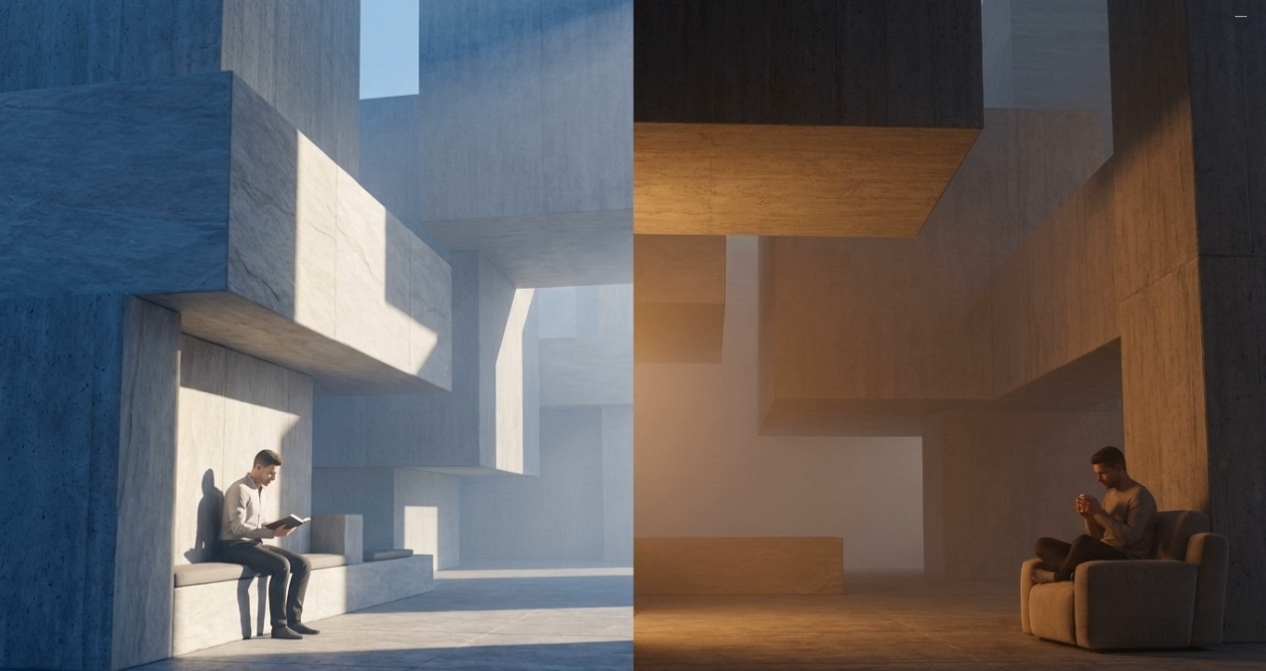
This image illustrates the contrast between static space and responsive design. On the left, cool daylight represents the crisp focus of morning, clean, architectural, and energizing. On the right, warm illumination introduces comfort and depth, reflecting the slower rhythm of evening.
Modern lighting systems such as Lutron Ketra allow interiors to move fluidly between these states. Rather than remaining fixed, light can evolve throughout the day supporting productivity, relaxation, and wellbeing. In this way, luxury design is no longer just about materials and form; it is about creating environments that adapt to the people who inhabit them.