Why a Lighting Designer Is Essential for Your Luxury Home
Elevating Your Living Experience
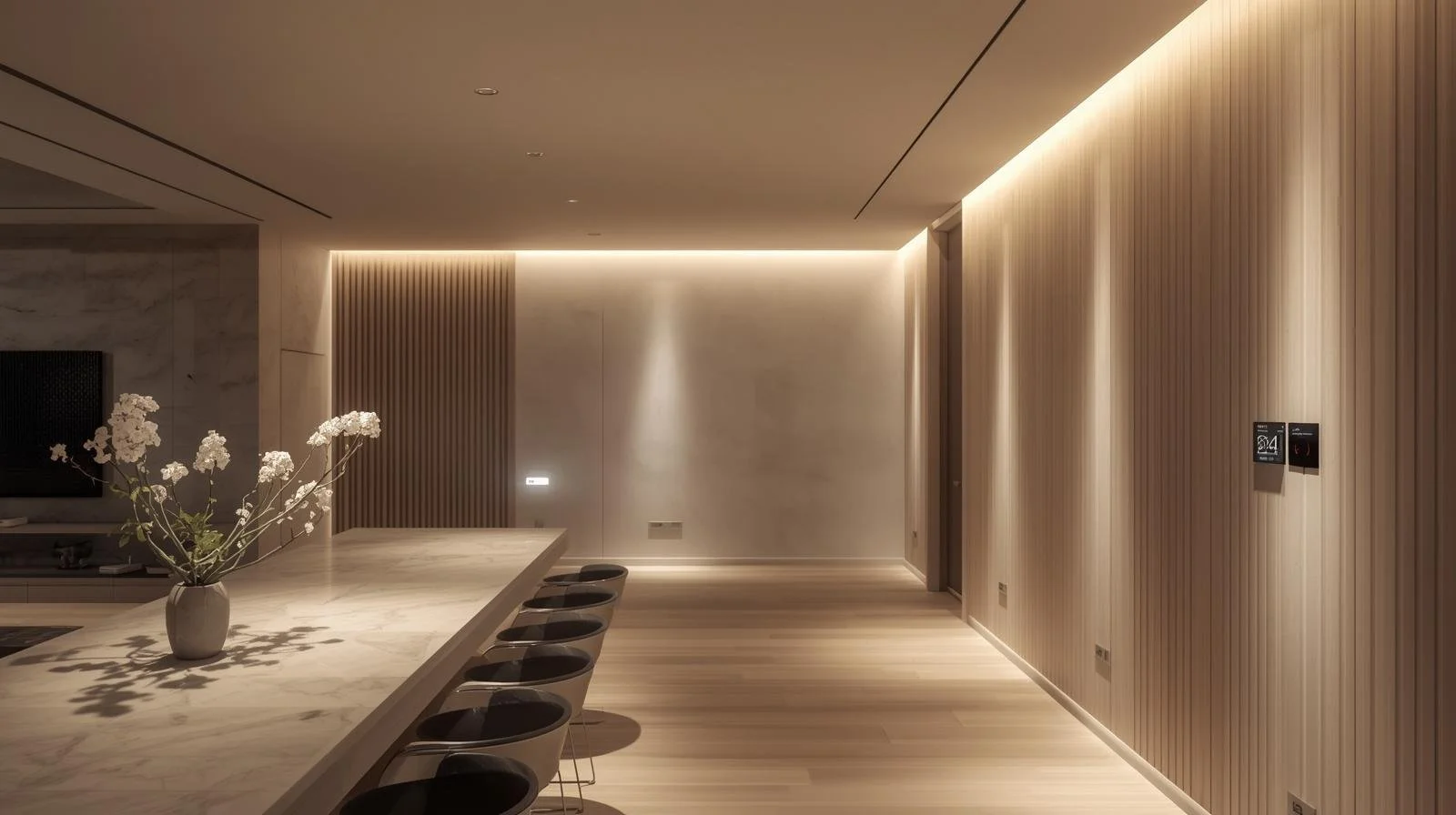
When it comes to building or renovating a luxury home, every detail matters. From the choice of materials to the architecture and interior design, everything must come together harmoniously to create the ultimate living experience. However, one crucial element often overlooked is lighting. A thoughtfully designed lighting plan, developed in partnership with a professional lighting designer, can elevate not just the aesthetic appeal of your home, but also its functionality. At Smarter Homes of Austin, we believe that the right lighting can transform your home in ways that will enhance your day-to-day life and leave a lasting impression on your guests.
Why Lighting Design Is More Than Just Fixtures
Lighting goes far beyond choosing a chandelier or installing some recessed lights. A lighting designer carefully crafts a layout that considers how light interacts with your space, architecture, and lifestyle. This expertise ensures that your home feels luxurious, comfortable, and functional at all times, whether you're entertaining guests, relaxing with family, or working from home.
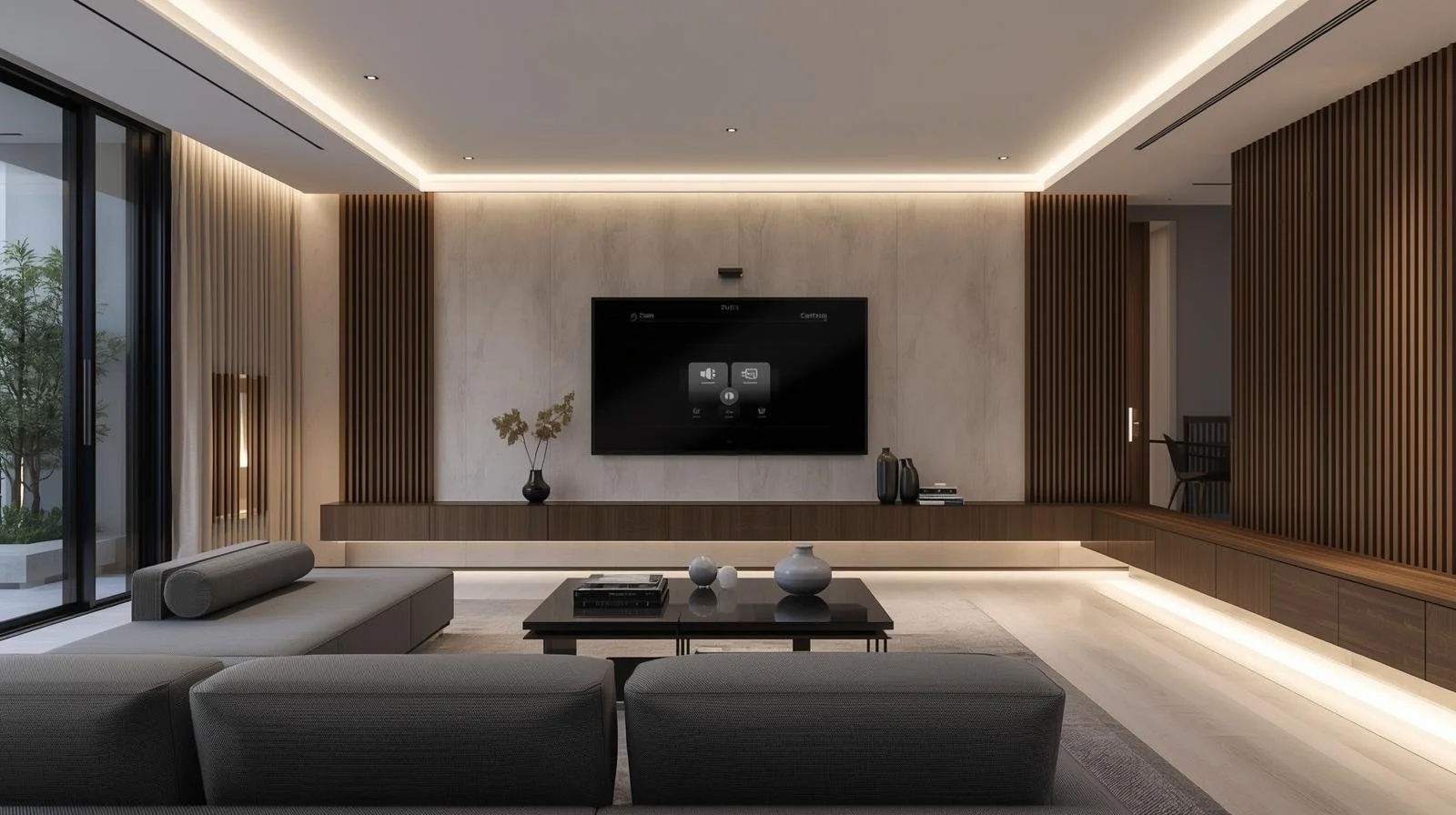
Minimalist living room with warm cove ceiling light, TV on a stone wall, wood-slat wall softly grazed, and floating console with toe-kick glow for a cozy, glare-free ambiance.
1. Set the Mood in Every Room
With a professional lighting designer on your team, you gain the ability to tailor the mood in every room to match your lifestyle. Imagine walking into your living room and having your lights automatically adjust to a soft, welcoming glow for a cozy evening with family. Or, step into your at-home office and have the lighting mimic that of a professional workspace, boosting productivity and focus. A well-designed lighting system can make these shifts seamlessly, enhancing every moment in your home.
2. Make a Statement to Impress Your Guests
The right lighting design doesn’t just enhance your personal experience; it creates a visually stunning environment for any visitors to your home. Whether you’re hosting a dinner party or a casual get-together, your lighting will be one of the first things guests notice. A lighting designer works to highlight your home’s architecture, artwork, and interior design, making each space feel intentional and luxurious. Paired with Smarter Homes of Austin’s advanced automation systems, you can easily adjust lighting scenes at the touch of a button to suit any occasion, impressing your guests with the perfect ambiance.
3. Customized Spaces for Work and Play
One of the greatest benefits of working with a lighting designer is the ability to create specialized lighting for various functions. Take, for example, a home office. Many luxury homeowners now prioritize having a designated space to work from home, and lighting plays a key role in productivity. With a designer's expertise, your office can be lit to emulate a professional workspace, reducing eye strain and helping you stay focused throughout the day.
The same applies to recreational areas, like an at-home sports court. If you’ve invested in creating an outdoor sports area for your family to enjoy, proper lighting is essential for nighttime use. Smarter Homes of Austin, in collaboration with your lighting designer, can provide comprehensive lighting solutions that offer full visibility across the court while maintaining an aesthetic appeal. Whether it’s a tennis court, basketball court, or even a multi-sport area, great lighting will allow you to make the most of these spaces long after the sun sets.
The Smarter Homes of Austin Approach to Luxury Lighting
At Smarter Homes of Austin, we understand the intricacies of luxury lighting. That’s why we partner with experienced lighting designers to ensure every project results in a tailored, sophisticated lighting plan that enhances both form and function. Our lighting systems are designed to integrate seamlessly with your home’s automation, giving you complete control over every aspect of your lighting, from brightness and color temperature to energy-saving schedules.
4. Enhancing Outdoor Living Spaces
A lighting designer’s expertise doesn’t stop at indoor spaces. Outdoor lighting plays a crucial role in maximizing the enjoyment of your home’s exterior areas. Whether it’s illuminating a backyard patio, highlighting architectural details, or ensuring safety along pathways, a lighting designer can enhance your outdoor experience with well-placed fixtures. Imagine having a sports court that is not only functional but beautifully illuminated for nighttime play, providing an unmatched luxury experience for you, your family, and your guests.
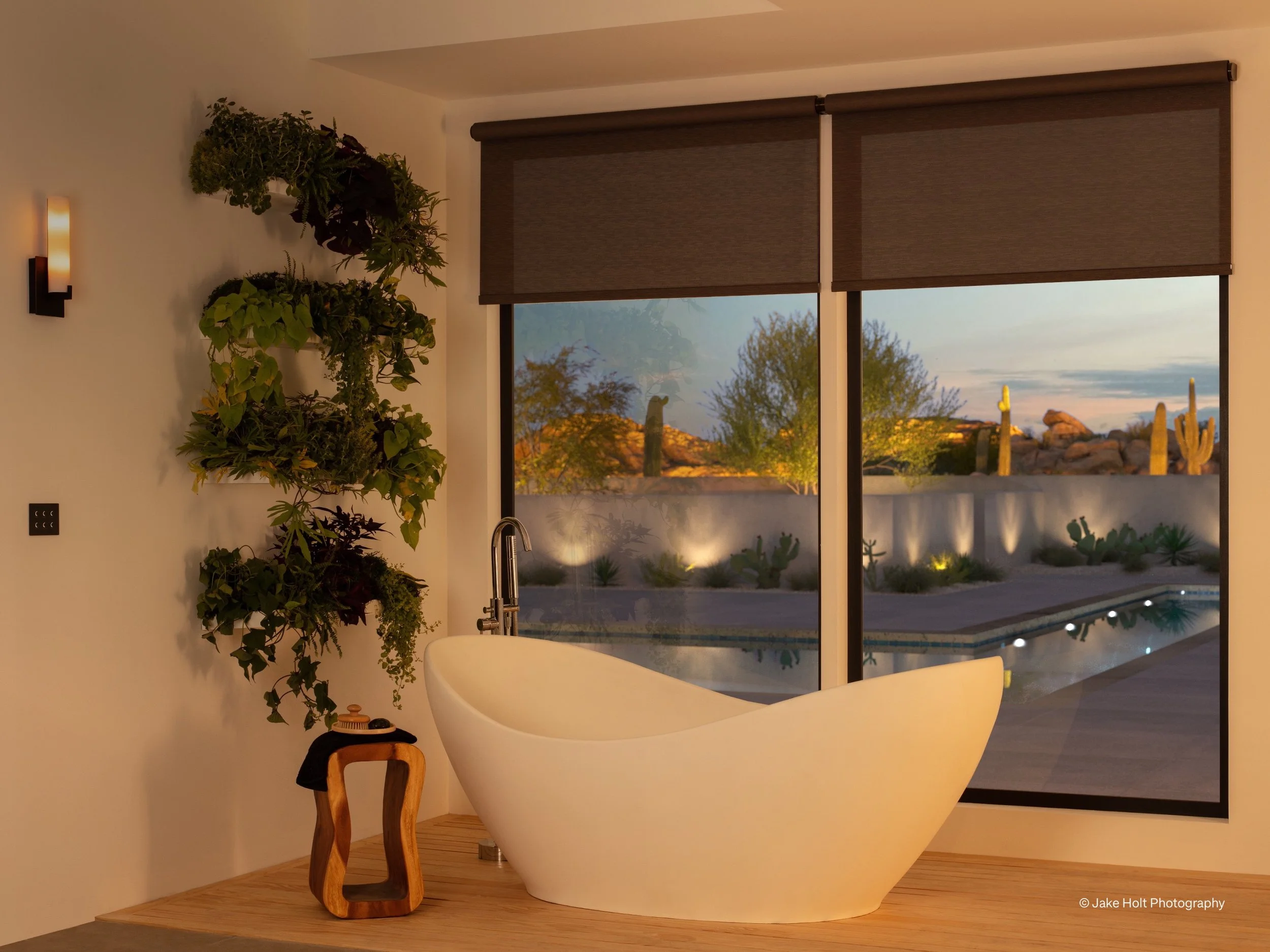
Spa bathroom with sculptural soaking tub facing floor to ceiling windows; outside at dusk, warm 2700K landscape lighting washes a low wall, discreet uplights accent cacti, and small downlit markers trace the pool edge glare free and resort-like.
Customization and Convenience: The Ultimate in Modern Living
In today’s luxury homes, customization is key. A lighting designer works with you to understand your unique needs and preferences, creating a custom lighting plan that integrates effortlessly with your lifestyle. At Smarter Homes of Austin, we offer advanced control systems that allow you to adjust your lighting to fit any situation, whether you're transitioning from a workday in your home office to a family evening in your outdoor sports court.
Through our collaboration with experienced lighting designers, we deliver a complete lighting solution that not only meets your aesthetic goals but also enhances the functionality of your home in ways that go beyond expectation. Whether you're looking for high-performance lighting in your office or outdoor areas, or mood-enhancing lighting for social spaces, our integrated systems ensure you’re always in control.
Partnering with Smarter Homes of Austin for the Best in Luxury Lighting
Luxury living is about more than just beautiful design, it’s about creating an experience that fits your life. Smarter Homes of Austin, in partnership with the best lighting designers, delivers innovative, tailored lighting solutions that enhance every aspect of your home. Whether you’re designing a home office, a state-of-the-art sports court, or simply seeking to impress your guests, our systems are crafted to deliver on all fronts.
Download PDF Content on Lighting Designer Here.
-
What if I told you that the paint color on your walls, the texture of your furniture, and even your stress levels at 5pm are basically dictated by something you probably haven't touched since you screwed it into the ceiling?
Yeah, it really is the ultimate invisible hand in interior design.
I mean, we walk through our homes all day feeling relaxed in one room, inexplicably anxious in another, or marveling at a piece of architecture, and we rarely realize that the illumination itself is pulling the strings.
Welcome to another deep dive. Today we are untacking a really fascinating stack of sources. We've got architectural design guides, automation manuals, and these incredibly detailed case studies from integration firms like Smarter Homes of Austin. And
our mission is to decode the hidden power of professional luxury lighting
Exactly. We're looking way past the basic utility of just flipping a switch so you don't trip over the coffee table in the dark. We want to show you how light is this active, dynamic tool.
It truly is a critical layer of the architecture itself. If you look at the visual backdrop for our deep dive today, this sleek, warmly lit, kind of modern space we're in right now, the lighting isn't just allowing us to see the room,
yeah, it's doing a lot more than
that, right? It is actively shaping the environment. It dictates the boundaries of the space, the warmth of the materials, and ultimately, basically how we experience being inside
it.
Okay, let's unpack this. Because if lighting is this Invisible Hand, I want to know how it actually sculpts the physical architecture around us. There is this concept repeatedly highlighted in the architectural design guides called Wall grazing.
Ah, yeah, wall grazing.
So to visualize this, think of a time you shone a flashlight flat against a brick wall in the dark. Suddenly, every tiny crumb of mortar and ridge of clay throws a shadow, making the wall look incredibly rugged. That's essentially what grazing does.
That is a perfect everyday example of the physics at play. I mean, texture relies entirely on shadow to be seen. You take a standard overhead bulb and place it in the center of a room,
like most people have
exactly it basically acts like a floodlight. It blasts the space with flat, uniform illumination from all angles. That light washes into every crevice and eliminates the shadows, effectively erasing the texture.
Oh, wow. So you're flattening out your own house.
You are, and wall grazing does the exact opposite. By strategically placing light fixtures very close to a textured surface, sometimes just inches away, and directing the beam at a steep downward or upward angle,
you're forcing the light to rake across the surface
Exactly.
It's almost like the architecture is a topographical map, and the grazing light acts like a setting sun, instantly turning a flat piece of paper into a three dimensional mountain range.
What's fascinating here is that that is exactly the mechanism a professional lighting designer maps out a customized layout based specifically on how those setting suns will interact with the home's unique art and materials.
And the sources provide a really striking case study of a minimalist living room. To illustrate this, the focal point of the room is this textured wood slat wall
right and under standard central lighting, those wooden slats would visually flatten out, looking like, well, just strikes wallpaper.
But by installing a linear fixture tucked into the ceiling right above the slats grazing the wood from top to bottom, the light catches the protruding edge of every single slat while dropping the recesses into shadow. It creates this stunning, high contrast visual rhythm,
gives the room an immediate pulse. And the designer didn't stop there. The sources detail how they paired that graze wall with a warm Cove ceiling light.
Remind me a cove light is the one tucked up into a ledge.
Yeah, it's tucked into a ledge high up on the wall so it bounces light off the ceiling and back down into the room. Then they mounted the television on a stone accent wall and placed a floating console beneath it featuring a toe kick glow,
a toe kick glow,
yeah, it's a hidden LED strip shining entirely underneath the cabinet, illuminating only the floor beneath it.
You know that toe kick glow sounds like a tiny detail, but I imagine it completely alters the perceived weight of the room.
Oh, it tricks the brain brilliantly by creating a pool of light underneath a heavy, solid object. It basically severs the visual connection between the furniture and the floor,
making heavy, monolithic cabinetry look like it's literally hovering in midair,
exactly,
yeah,
which aggressively enhances that sleek, modern esthetic. And what ties all these elements together, the grazed slats, the bounced Coast ceiling, the hovering console, is that the source of the light is entirely hidden from the eye. It is all indirect lighting,
which means no glare. I mean that glare free effect is the holy grail for relaxing in a living room. Oh,
absolutely.
We've all experienced the sheer annoyance of trying to watch a movie while a bare bulb reflects directly off the TV screen, or having a harsh lamp constantly catching the corner of your eye. It physically makes you tense up
because your eyes are constantly micro, adjusting to the brightest point in the room when the lighting is indirect and tailored, your eyes can finally relax. It forces the guest to look at the beauty of the architecture, not the bulb. It makes the space feel incredibly intentional and luxurious, maximizing the property's esthetic appeal without ever feeling, you know, overwhelmingly bright.
But
here's where it gets really interesting, because we have to look at the functional side of things. We don't just sit and admire our living room walls like a museum exhibit.
Unfortunately, not, no
right? We actually have to live and work in these spaces. So how does this beautifully sculpted light keep us functional when the sun goes down? Because the case studies put a massive emphasis on the home office.
They do.
They note that professional lighting can actively boost focus and efficiency. But wait, hold on, we've all sat under those awful buzzing fluorescent office lights. Are you telling me people are paying luxury prices to bring that corporate misery into their own homes?
It's a completely understandable fear. Corporate lighting is historically atrocious, but tailored illumination is the exact opposite of that fluorescent cubicle farm experience.
Okay, good, yeah.
Corporate lighting is usually engineered to hit a minimum regulatory standard of brightness across a massive square footage using the cheapest troffer fixtures available.
So it just blasts the room with cold, sterile light,
exactly tailored, luxury lighting, on the other hand, is really an exercise in biological precision,
okay? But if you aren't just throwing a massive bright, 500 watt bulb into the room to keep me awake, how are you actually keeping my eyes from getting tired during a 10 hour work day,
what comes down to understanding the mechanics of eyestrain. Let's look at the contrast ratio of a typical home office.
Okay,
if you were staring at a bright, glowing computer monitor in a relatively dim room, the contrast is extreme. Your pupil acts just like a camera aperture every time you look at the bright screen, your pupil aggressively constricts
right to block out the harsh light,
yes. And then when you look away to grab a pen or check a physical document in the dim room, the pupil dilates to let more light in.
So you are basically putting your eye muscles on a treadmill all day long. They are constantly expanding and contracting
Exactly. And that constant muscle fatigue is what causes the classic 2pm headache and the loss of concentration.
Oh, that makes so much sense,
right? So a professional designer eliminates this by creating a balanced field of vision. They layer the lighting that we use, ambient room lighting, to lift the overall brightness of the space, shrinking the contrast between the room and the monitor.
Okay, so the room isn't so dark anymore,
right? And then they introduce targeted task lighting at the desk, perhaps a focused beam hitting the keyboard and your documents so your eyes don't have to strain to read physical text.
Wow.
You are emulating the productivity of a high end professional workspace by removing the physical friction from the environment. It's working with your biology rather than against it.
Precisely. You hold your concentration longer because your body isn't
wasting energy.
But that tailored, highly productive desk Lighting presents a new problem. Nobody wants to relax in a room that feels like a productivity zone at 8pm very true. If you use your home office to read a novel or have a quiet drink in the evening, how do we dismantle that intense office vibe without physically dragging lamps in and out of the room?
That brings us to the brains behind the bulbs, the automation manuals we are viewing introduce the concept of the integrated smart ecosystem. This is where the true luxury of modern living is realized. Okay, we are moving far beyond the simple rotary dimmer switch on the wall.
It's like having an invisible DJ for your house seamlessly crossfading the mood of the room as your day progresses. The sources call it seamless, comprehensive control, which sounds great, but I want to break down what we are actually controlling.
The
manuals keep mentioning color temperature and kelvins. What does that actually mean for the person sitting in the room?
Color Temperature is arguably the most powerful psychological tool in lighting design, and it is measured in kelvins. Okay, a high Kelvin reading, say, 5000 or 6000 Kelvins, produces a crisp blue white light. This mimics the daylight of a bright, clear noon sky,
and biologically, that blue white light triggers our brains to suppress melatonin and produce cortisol
Exactly. It makes us alert, focused and awake. This is what you want in your home office at 10am
but at 8pm pumping your brain full of cortisol is a terrible idea. You want the opposite,
which is where lower Kelvin temperatures come in a rating around 2700 Kelvins produces a warm amber hue
like a sunset.
Yes, from an evolutionary standpoint, that color mimics the light of a setting sun or a fire in the hearth, it signals to your brain's pineal gland that the day is over, naturally triggering the release of melatonin, which helps you wind down and relax.
Okay, so the biology makes sense, but how does the physical bulb actually do that? How does one fixture in the ceiling give me both a crisp noon sky and a warm sunset
through the engineering of tunable white LEDs inside a high end architectural fixture, there isn't just one light source. There is an array of tiny LED diodes.
Oh, interesting,
yeah. Some are coated in phosphorus that emit cool white light, and others emit warm amber light. The Smart automation system basically acts as the conductor,
so it's mixing them
exactly when you want the room to cool down, the system increases the voltage to the cool diodes and dims the warm ones. When you want a sunset glow, it cross fades them in reverse, it seamlessly mixes the light spectrum in real time
and the sources. Refer to grouping all these complex adjustments together as instant scene setting, so you aren't individually tuning the diodes or sliding five different dimmers to get the mix right.
No, not at all.
You just tap a button on a keypad or your phone label evening, and the system knows the map.
If
we connect this to the bigger picture, let's look at how the case studies from Smarter Homes of Austin apply this. Imagine you are hosting a dinner party.
Okay, I'm imagining
it.
You finish up a few emails in the home office, which is bathed in that bright, 4000 Kelvin focused light. You walk into the dining room, tap the entertain scene on the wall keypad, and the entire house responds. The overhead lights dim to 15% the architectural grazing lights on the textured walls fade up to highlight the art. The color temperature smoothly shifts down to a warm, 2500 Kelvin glow that makes the food and your guests look fantastic.
It effectively allows a single room to hold multiple functional identities. It's adapting to the human, not forcing the human to adapt to the house.
That is the hallmark of modern luxury. You remain in total, effortless control of your environment, shifting the psychological impact of the space instantly to match your current routine.
And that seamless lifestyle transition doesn't stop at the back door. The automation system actively pulls you outside, extending the footprint of your living space long into the night.
It does, but
moving outside presents an entirely different set of challenges.
It really does, because outside, you are competing with the darkness of nature, the scale of the landscape, and, frankly, the sight lines of your neighbors.
Right? The design guides spend a lot of time on recreational areas, tennis courts, basketball courts, multi sport setups. This is where I struggle to visualize the execution. Well, how do you illuminate a basketball court so you can actually see a fast moving ball, but without turning your luxury backyard into a blinding, glaring stadium parking lot. Nobody wants their neighbors thinking a UFO is landing every time they want to shoot some hoops.
This raises an important question, and it is an incredibly delicate balancing act for competitive play, you need high foot candles meeting a high intensity of light hitting the ground
right. You have to see the ball, the painted lines, the other players
exactly, without any dark spots. But if you just put a massive floodlight on a pole, that light spills everywhere, ruining the ambience of the patio and angering the neighbors.
So what's the architectural solution?
It comes down to precision optics and internal shielding inside the light fixtures themselves. Professional landscape lighting designers use specialized housings that physically cut off the beam angle
so it acts like a blinder.
Yes, they capture the light and force it strictly downward onto the court. You get a perfectly illuminated rectangle of playable space. But if you step five feet off the court onto the grass. It is completely dark. The light goes exactly where it is needed and nowhere else.
That level of control is fascinating, and it perfectly sets up the contrast with the other major outdoor example in the sources, which is arguably my favorite part of the entire stack.
Oh, the spa bathroom setup.
Yes, they detail this incredibly vivid spa bathroom. Setup.
The spa bathroom is a master class in contrasting interior and exterior environments.
Picture this. You have a massive, sculptural soaking tub inside a dark, minimalist bathroom. It is facing a wall of floor to ceiling glass windows looking out into the backyard. Outside, it's dusk.
Sounds amazing.
To create a resort like feel that pulls your eye through the glass, they use three very specific techniques. They use warm, 2700 Kelvin landscape lighting to wash a low stone wall. They place discrete up lights under the cacti, and they use small, down lit markers to trace the edge of the swimming pool.
Let's dissect why those specific choices work so well. First, they're using that 2700 Kelvin temperature across the board outside, as we discussed that Amber firelight color triggers relaxation
right
by washing the low stone wall, which is a softer, wider beam compared to the tight raking of the indoor wall grazing we talked about earlier, they create a soft, glowing backdrop that defines the edge of the property,
and the up lights on the cacti
well up lighting a tree or a cactus from the base creates a dramatic, towering silhouette against the night sky. It highlights the architectural shape of the plant. But the most crucial detail here is the pool edge
right the sources specifically call out downlet markers for the pool, rather than standard glowing pathway lights. Why is the downward angle so critical there?
It's all about the physics of reflection of the angle of incidence. The person enjoying this view is sitting in a dark tub inside, looking out through a pane of glass.
Okay?
If the pool lights were pointed horizontally or upwards, that light would hit the surface of the pool water, bounce off, hit the glass window and reflect directly back into the bathers eyes,
oh, wow,
it would create a blinding glare, and suddenly the glass window just looks like a mirror reflecting the inside of the bathroom.
You would lose the view of the backyard entirely precisely
by using downward facing marker lights. The illumination is trapped beneath the sight line. It clearly defines the physical edge of the water so no one accidentally falls in, hitting the safety requirement,
but it prevents any stray light from bouncing back toward the house
Exactly. It achieves both critical safety and stunning glare free beauty. It pulls your eye through the glass and out into the landscape.
So what does this all mean for you the listener, we've covered everything from the deep shadows of an interior slatted wall to the biological mechanisms of eye strain, right down to the reflection angles on a backyard swimming pool.
It's a lot to take
in. It is but the ultimate takeaway from these sources is that a luxury lighting plan is not just a passive utility when it is designed by professionals and integrated into a smart ecosystem. The lighting becomes a dynamic, active participant in your life.
Customization truly is the ultimate modern luxury. By bridging the physical architecture of your home, the biological realities of your circadian rhythms and the seamless technology of tunable LEDs, you are doing more than just decorating,
right?
You're creating an environment that actively supports how you want to feel and how you need to function during every single hour of the day.
It is a profound shift in how we interact with our homes. But before we wrap up, I want to leave you with one final thought to mull over,
okay,
something that takes the technology we've discussed today to its logical next step, if smart automation currently allows us to manually tap a keypad to shift scenes, change color temperatures and drop our cortisol levels, how far away are we from homes equipped with ambient biometric sensors? That's
interesting.
Imagine a house that automatically reads your elevated heart rate and stress levels the moment you walk through the front door after a terrible commute,
wow,
it instantly and imperceptibly cools the color temperature and dims the lights to calm your nervous system before you even have the chance to touch a switch.
When the house begins to anticipate the biological needs of a human, the definition of luxury changes entirely
something to think about the next time you find yourself reaching for a light switch in the dark, thanks for joining us on this deep dive.es here
Frequently Asked Questions about Human Centric Lighting
-
A lighting designer ensures your home is not only beautifully illuminated but also highly functional. They create a layered lighting plan that enhances architecture, supports your lifestyle, and delivers a cohesive, elevated experience throughout every space.
-
No. Lighting design goes far beyond selecting fixtures. It involves understanding how light interacts with materials, ceiling heights, textures, and daily routines. A professional designer considers placement, intensity, color temperature, and control systems to create a fully integrated environment.
-
Thoughtful lighting enhances how you feel and function in your home. It can:
Support productivity in workspaces
Create relaxing environments in the evening
Improve visibility and comfort
Adapt to different activities throughout the day
This transforms your home into a space that works with you, not against you.
-
Yes. Lighting is one of the most powerful tools for shaping mood. A lighting designer can create environments that feel calm, energizing, intimate, or vibrant depending on the time of day or activity, all through intentional control of brightness and color temperature.
-
Lighting sets the tone for how guests experience your home. A well-designed system highlights architectural features, artwork, and focal points while allowing you to adjust scenes instantly for different occasions whether it’s a dinner party or a casual gathering.
-
Layered lighting combines multiple types of light:
Ambient (general lighting)
Task (functional lighting)
Accent (highlighting features)
This approach creates depth, eliminates harsh shadows, and ensures each space is both beautiful and practical.
-
Absolutely. A lighting designer tailors each space to its purpose. For example:
Home offices are designed for focus and reduced eye strain
Living areas prioritize comfort and flexibility
Outdoor spaces balance aesthetics with safety and usability
Every room is intentionally designed to support how you live.
-
Outdoor lighting extends the usability and beauty of your home. It enhances safety along pathways, highlights landscaping and architecture, and allows spaces like patios or sports courts to be enjoyed long after sunset.
-
Automation allows your lighting to adjust automatically based on time of day, activity, or occupancy. With systems like those from Smarter Homes of Austin, you can control lighting scenes instantly or let your home respond naturally without manual adjustments.
-
A lighting designer focuses on the visual and experiential aspects of lighting, while an integrator like Smarter Homes of Austin ensures the technology and control systems function seamlessly. Together, they deliver a complete solution that blends design with performance.
-
While especially impactful in luxury homes, lighting design benefits any space where quality, comfort, and aesthetics matter. It’s about creating intentional environments, not just adding more fixtures.
-
The earlier, the better. Bringing in a lighting designer during the architectural planning phase ensures:
Proper fixture placement
Integration with ceiling and millwork design
Optimal wiring and control system planning
Early collaboration leads to the best results.
-
Smarter Homes partners with experienced lighting designers to deliver fully integrated systems that combine luxury aesthetics with advanced automation. The result is a home that is not only beautifully lit but intelligently responsive to your lifestyle.
