Why Your Smart Home Needs a Power Plan, Not Just a Generator
A generator can be one of the smartest investments a homeowner makes, especially in a technology-rich luxury home. When utility power goes out, a properly designed standby generator can keep the home comfortable, secure, and functional.
But a generator is only one part of the power conversation.
In a modern smart home, the goal is not just to keep the lights on. The goal is to keep the right systems running safely, in the right order, with the cleanest and most stable power possible before, during, and after an outage. And that is a question most homeowners are never asked until something goes wrong.
Generator vs. RoseWater Energy: Two Different Jobs
A standby generator and a RoseWater Energy system are not competing products. They solve different problems, and for luxury smart homes, they work best together.
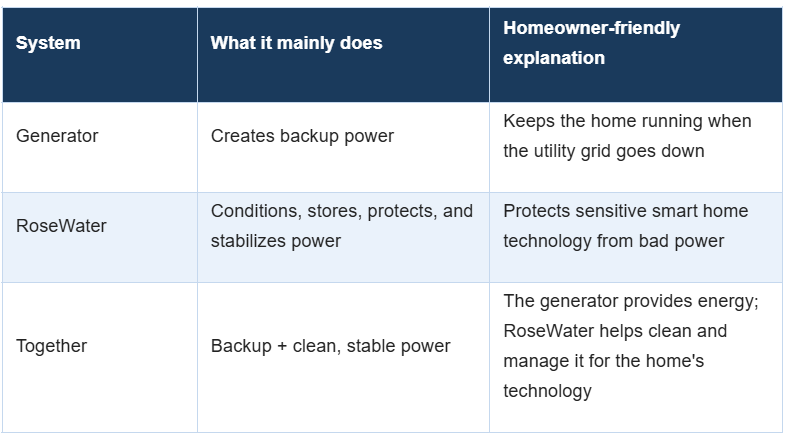
RoseWater and generators work together to keep a smart home powered, protected, and stable during outages or poor power conditions.
Why a Generator May Not Be Enough on Its Own
This is the question most homeowners never think to ask:
Covered from what?
Covered from a long outage? A generator helps.
Covered from surges, brownouts, voltage drops, lightning events, and the kind of power instability that damages or disrupts sensitive electronics? Not necessarily.
A smart home faces a longer list of power threats than just "the power went out." Voltage fluctuations, dirty grid power, and transfer events that occur when switching from utility to generator and back can all cause problems for lighting processors, control systems, networking, AV equipment, and motorized shades.
A generator does not condition the power it produces. RoseWater does.
Should the Generator Come On Automatically?
For most luxury smart homes, yes an automatic standby generator is usually the better choice. An automatic transfer switch detects utility power loss and starts the generator without any action from the homeowner. This matters because:
The home keeps operating even if no one is there
Security systems, gates, cameras, and networking stay online
Freezers, refrigerators, and HVAC are not dependent on someone being home to flip a switch
Smart home processors do not sit through a prolonged outage before getting power back
For Austin and Westlake homeowners with large estates, vacation properties, or homes that are sometimes unoccupied, automatic is almost always the right answer.
Should There Be a Delay Before the Generator Starts?
Usually, yes. A short, intentional delay helps the system confirm that an outage is real before starting the generator, rather than reacting to every brief flicker of power.
The goal is not "instant." The goal is a safe, stable, and intentional transfer.
The appropriate delay should be determined by the generator professional and the electrician based on the specific transfer switch, utility behavior, and the home's equipment. Not every home needs the same timing, and getting it right is part of a well-designed backup power plan.
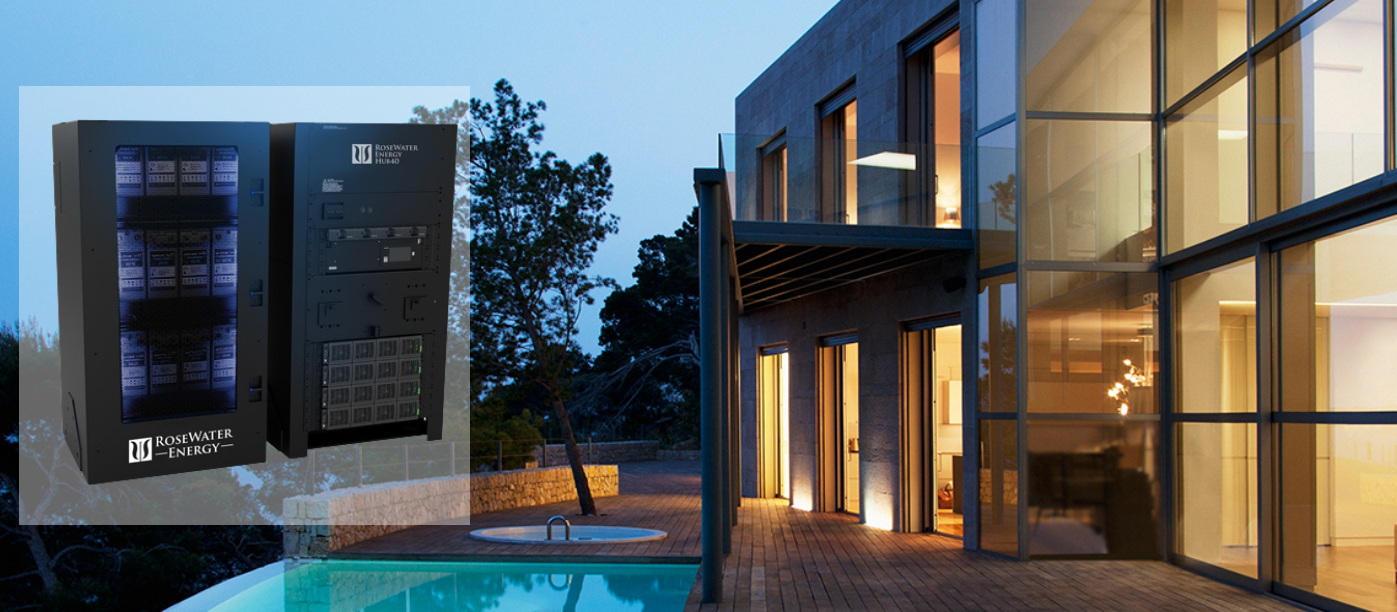
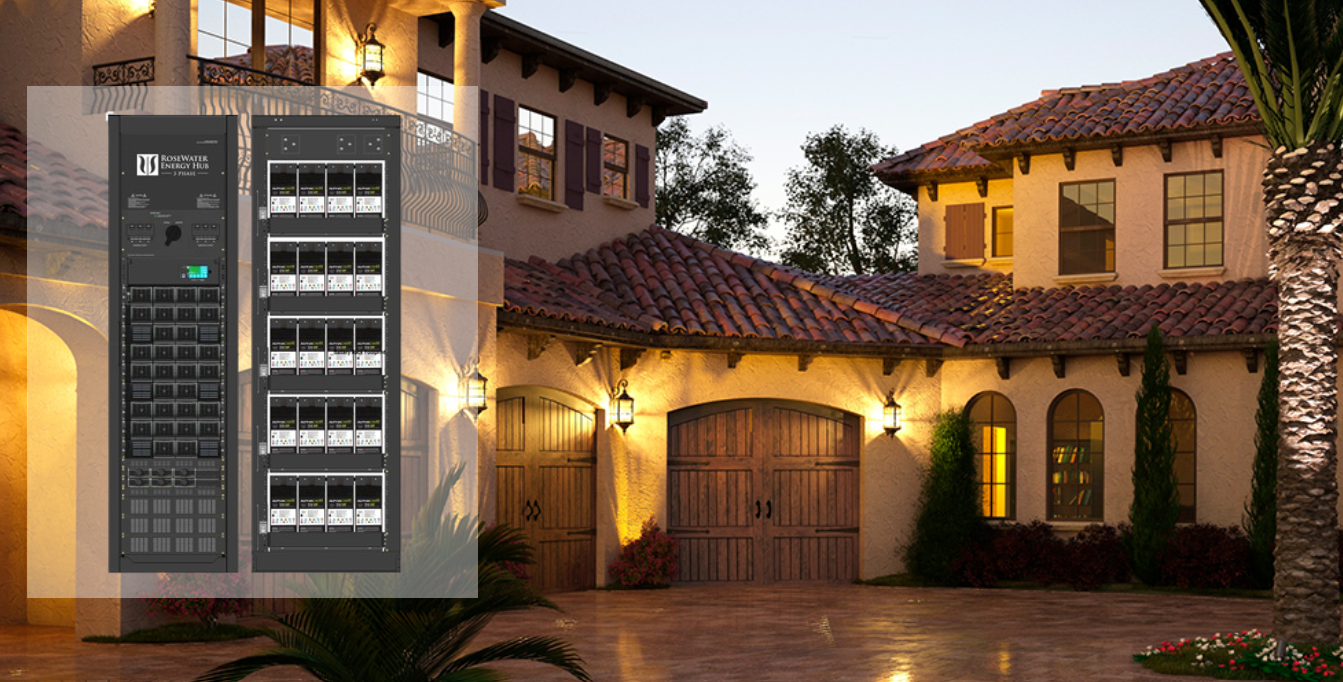
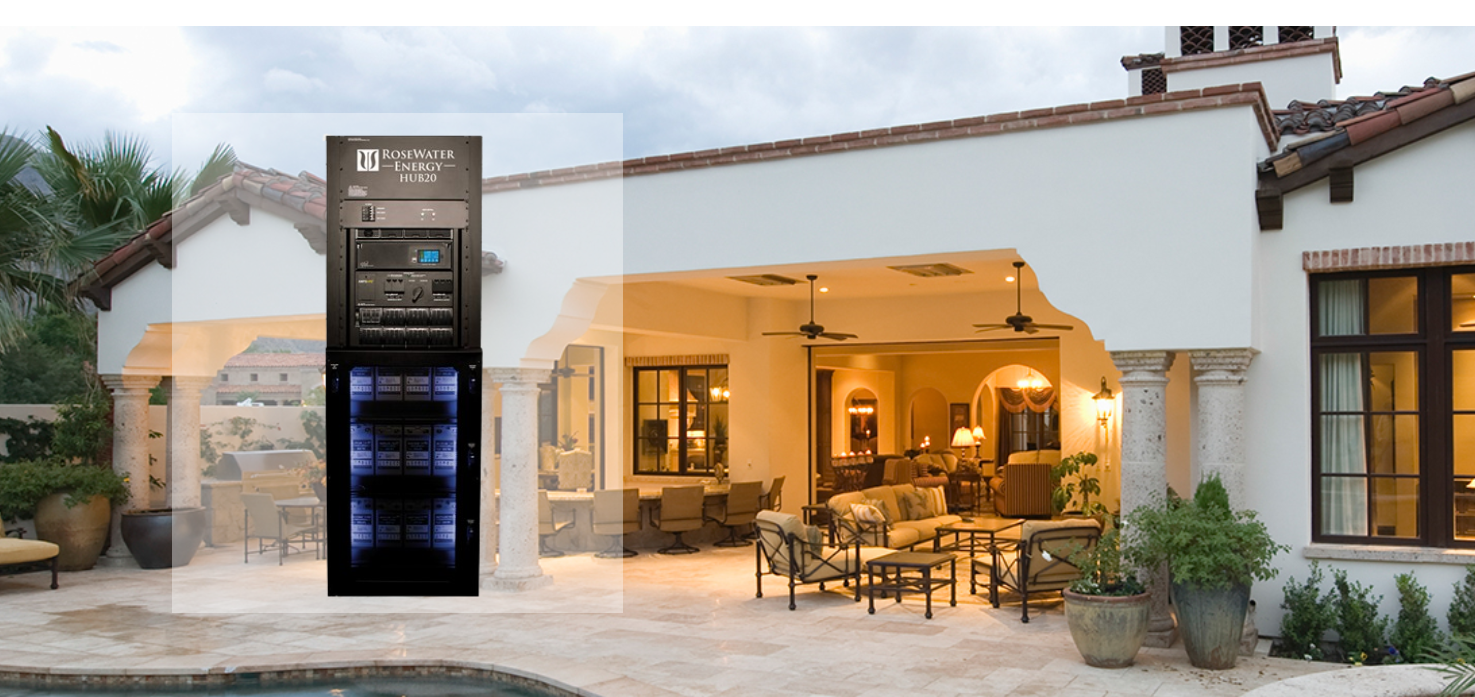
This is also where RoseWater's battery backup can play a bridging role, providing clean, protected power to critical technology systems during the short window between a utility loss and the generator coming online.
Should the Whole Home Come Back On at Once?
For a smart home, step-by-step load management is almost always better than switching everything on simultaneously.
Here is why: many home systems require more power at startup than while running. HVAC units, pumps, motors, refrigerators, pool equipment, and large appliances all have startup surges. If everything tries to restart at the same moment:
Lights may dim or flicker
The generator may be overloaded or strained under the demand
HVAC or pump motors may fail to start properly
Breakers may trip
Sensitive electronics may reboot, lose configuration, or be damaged
The generator itself may shut down to protect against overload
A generator should not be treated like a light switch for the entire estate. The smarter approach is to bring the right systems online in the right order.
Load management systems are designed to prioritize critical equipment, stage startup sequences, and shed non-essential loads when needed, helping a well-sized generator reliably support the most important parts of the home.
What Should Stay on Generator Power and What Should Not
Not every load in a home needs to be on the generator. A smart backup plan separates critical systems from comfort or luxury loads and prioritizes accordingly.
Systems that typically stay on generator power:
Lighting control processor and core lighting circuits
Wi-Fi router, network switches, and access points
Security system, cameras, and NVR/recording equipment
Gate and access control systems
Refrigerator and freezer
Selected HVAC zones (usually the most critical areas of the home)
Garage doors
Medical equipment, if applicable
Essential outlets and home office equipment
Systems that may stay off or be limited during a backup event:
Pool heaters and equipment
Electric water heaters (beyond minimum need)
EV chargers
Full-house HVAC all at once
Heated floors, saunas, and steam showers
Outdoor kitchens and landscape lighting
Decorative water features
High-load appliances such as electric ovens and dryers, unless specifically planned
The question is not "Can we put the whole house on the generator?" The better question is: what does the homeowner actually need to live safely, comfortably, and securely during an outage, and what can wait?
How a Generator and RoseWater Work Together
When both systems are in place, they create a layered power strategy that covers more scenarios than either one can address alone:
Normal utility power: RoseWater conditions and stabilizes the power feeding sensitive smart home systems
Power becomes unstable or drops: RoseWater's battery provides immediate bridging power to protected systems, with no gap
Generator starts: the generator comes online through the automatic transfer process
Generator supplies backup power: RoseWater continues to manage and clean the power feeding critical technology
Utility power returns: the transfer back to the utility is another potentially messy moment. RoseWater protects sensitive electronics through that transition as well
The generator is the power source. RoseWater is the power quality and protection layer.
Questions Every Smart Homeowner Should Ask Before the Next Outage
If you are planning a generator installation, upgrading a smart home system, or simply want to understand what your home is and is not protected from, these are the right questions to ask:
How Smarter Homes Helps
Backup power should not be an afterthought. For homes with advanced lighting, motorized shades, whole-home networking, surveillance, AV, access control, and automation, the power plan is part of the smart home design, not something to figure out after installation.
At Smarter Homes, we help coordinate the technology side of this conversation. That means evaluating which systems need protected power, working alongside the electrician and generator professional to plan the appropriate infrastructure, integrating RoseWater into the overall smart home system, and providing long-term service support so the home continues to perform as designed.
The generator provides the energy. We help make sure the technology knows what to do with it.
If you are planning a new home, a remodel, or a generator or smart home upgrade in the Austin or Westlake area, reach out to the Smarter Homes team. We are happy to walk through what your home actually needs.
