Why Your Smart Home's Power Is Working Against It (And What to Do About It)
A generator is the energy source, not the whole plan
A standby generator keeps the home running during a long outage. It does not clean the power it produces, and it does not protect sensitive electronics from surges, brownouts, or the transfer events when switching between utility and generator. A power plan for a smart home covers both.
- Automatic start with a short intentional delay, so a brief flicker does not trigger a transfer
- Stepped load management, so HVAC, pumps, and large appliances do not all start at once
- Critical circuits on the generator: lighting control, network, security, cameras, gates, refrigeration, selected HVAC zones
- Luxury loads limited during an outage: pool equipment, EV chargers, saunas, outdoor kitchens
RoseWater Energy provides battery bridging and power conditioning for protected technology loads, so critical systems see clean power before, during, and after a generator transfer. The generator supplies energy. The conditioning layer protects the electronics. We coordinate the technology side with your electrician and generator professional.
You spent good money on a smart home. Premium LED lighting. A heat pump. Maybe solar panels. A whole-home generator for when the grid goes down.
So why does something always seem to flicker, glitch, or die before it should?
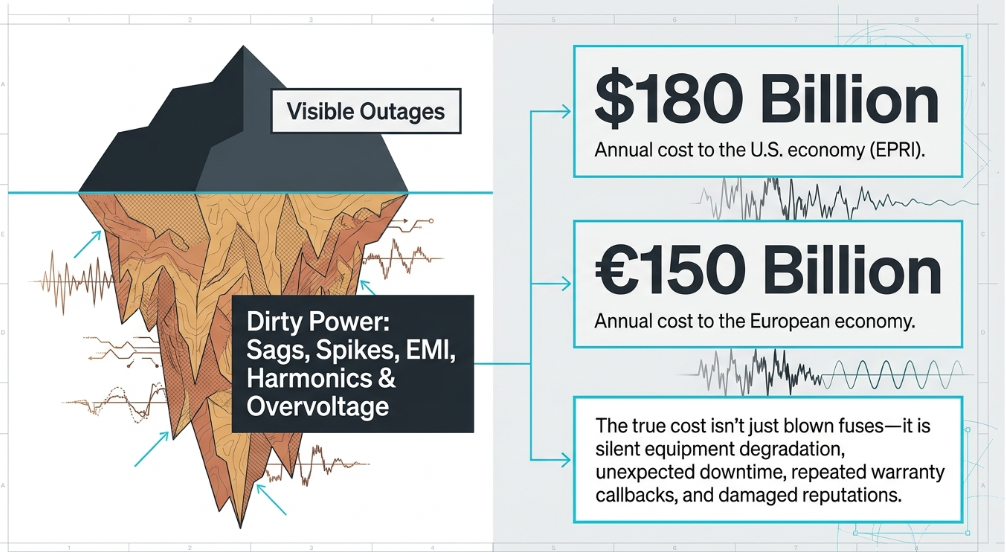
Here's the honest answer: your electronics aren't failing because they're defective. They're failing because the power feeding them is doing quiet, invisible damage, and most homes have zero protection against it.
It's called dirty power. And at Smarter Homes, it's one of the most important conversations we're having with homeowners right now.
The Power Coming Into Your Home Isn't as Clean as You Think
We tend to imagine electricity as a smooth, steady stream flowing from the utility into our homes. In reality, the power on your grid is constantly fluctuating, with sudden spikes, brief voltage dips, sustained surges, and electrical "noise" generated by everything from your neighbor's industrial equipment to your own solar panels and smart home systems.
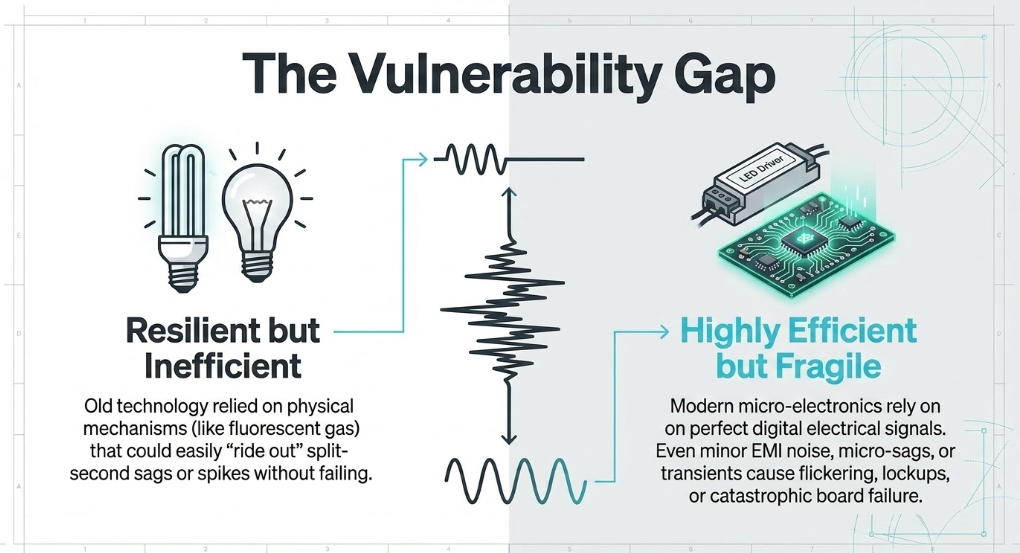
For older homes with older technology, this wasn't a major issue. Traditional fluorescent lights, for instance, had gas inside the tubes that acted as a natural buffer, riding out brief power dips without anyone noticing. Old appliances were heavy, simple, and forgiving.
Modern smart home technology is the opposite. Today's LED fixtures, heat pumps, automated controls, and connected appliances run on sensitive microchips and solid-state electronics. They're extraordinarily efficient and extraordinarily fragile. The same leap forward that made your home smarter also made it far more vulnerable to the imperfect power supply we've always had.
Think of it this way: we traded a heavy truck with soft suspension that floated over rough roads for a precision sports car with a tight, responsive ride. The sports car is better in almost every way, but now you feel every single pebble.
Your Whole-Home Surge Protector Has Real Limits
This is where most homeowners feel protected when they shouldn't.
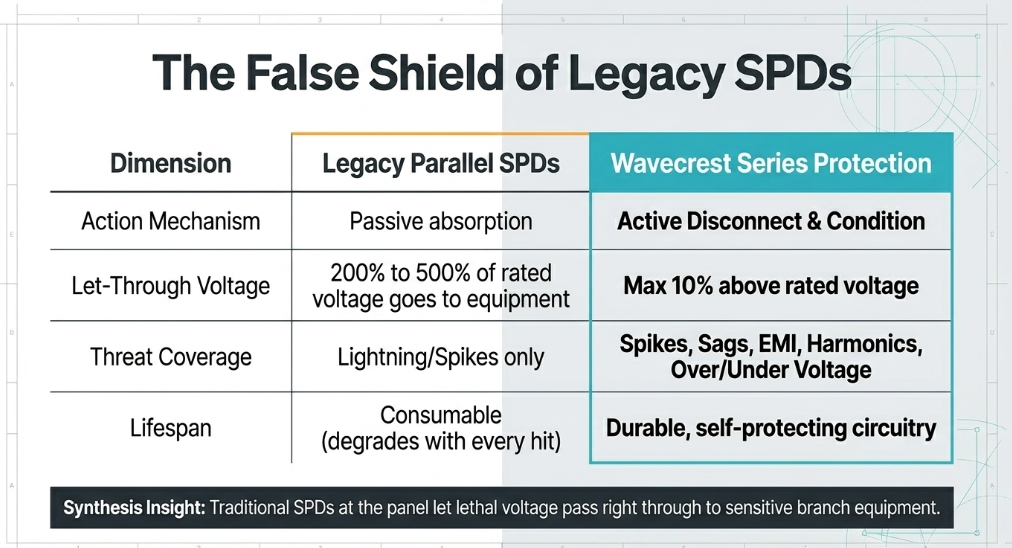
A surge protector wired into your main panel does one job well: catching massive, instantaneous voltage spikes, think lightning striking the grid. But it has three significant blind spots that leave your equipment exposed:
It degrades silently. Every small hit wears down the internal components. Most homeowners have no idea if theirs is still functioning.
It has a time limit. After absorbing a hit for a fraction of a second, its capacity is exhausted.
It lets too much through. This is the critical one. Even after a major spike is detected, a standard surge protector can still allow 200–500% of normal voltage to flow directly to your electronics. That excess voltage quietly damages the microprocessors inside your appliances, your lighting controls, and your safety devices, often without any visible sign until something just stops working.
The Threat Can Come From Inside Your Own Home
Here's what surprises most smart homeowners: dirty power isn't just an external problem sneaking in from the grid. The more connected and automated your home becomes, the more electrical "noise" it generates internally.
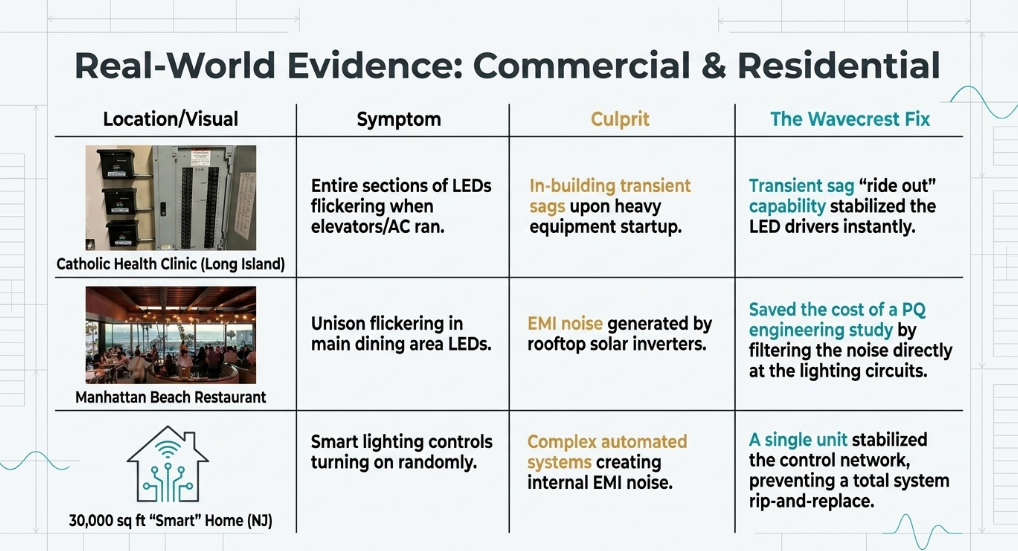
Solar panel inverters, the devices that convert solar energy into usable household current, produce significant interference as part of their normal operation. Smart dimmers, automated HVAC systems, and home automation controls do the same. When these systems share circuits, they create interference that can cause LED lights to flicker randomly, smart controls to misfire, and expensive equipment to behave in ways that leave even experienced electricians baffled.
There's a documented case of a 30,000-square-foot smart home in New Jersey where the foyer lights were turning on on their own at all hours. The contractor replaced every LED driver in the house multiple times. The problem persisted. It wasn't defective hardware. The home's own sophisticated systems were generating enough electrical noise to mimic an "on" signal to the lighting controls. One targeted fix on the problematic circuit solved the entire issue.
Sound familiar? If you've got unexplained flickering, equipment that keeps failing, or smart home controls that act unpredictably, dirty power is very likely involved.
The Safety Angle Nobody Talks About
This is where it gets serious.
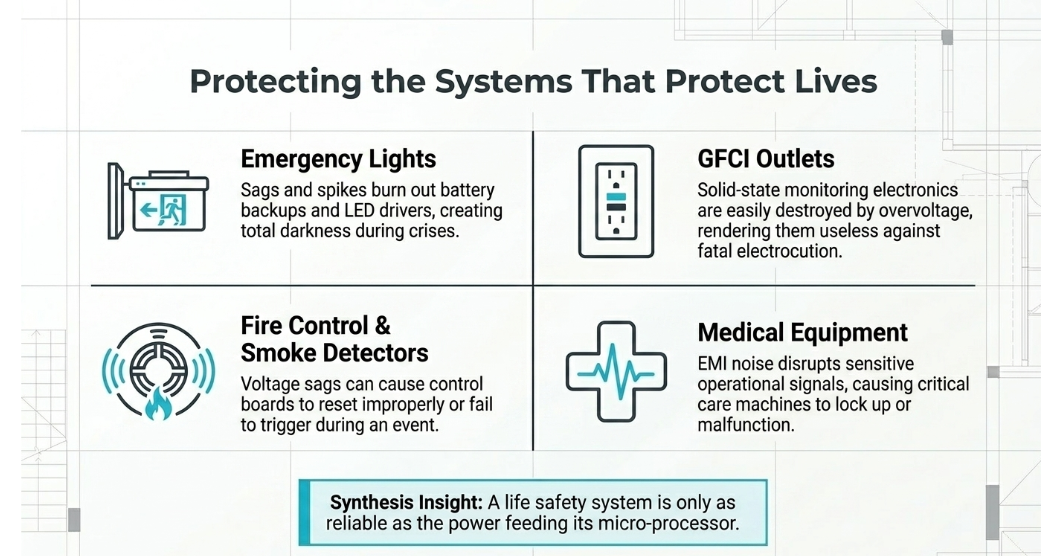
The GFCI outlets near your sinks and in your bathrooms, the ones with the little test and reset buttons, contain sensitive circuit boards designed to detect dangerous ground faults and cut power before someone gets electrocuted. They're a critical layer of home safety.
But when dirty power damages that internal board, the outlet still works. You can plug something in, and it powers on. Everything looks normal. The safety sensor, however, may be dead, and you'd have no way of knowing.
The same applies to smoke detectors and carbon monoxide sensors with electronic components. Prolonged exposure to voltage fluctuations and electrical noise can silently compromise the devices you rely on most. This isn't a comfort issue. It's a safety issue.
What Smarter Homes Is Doing About It
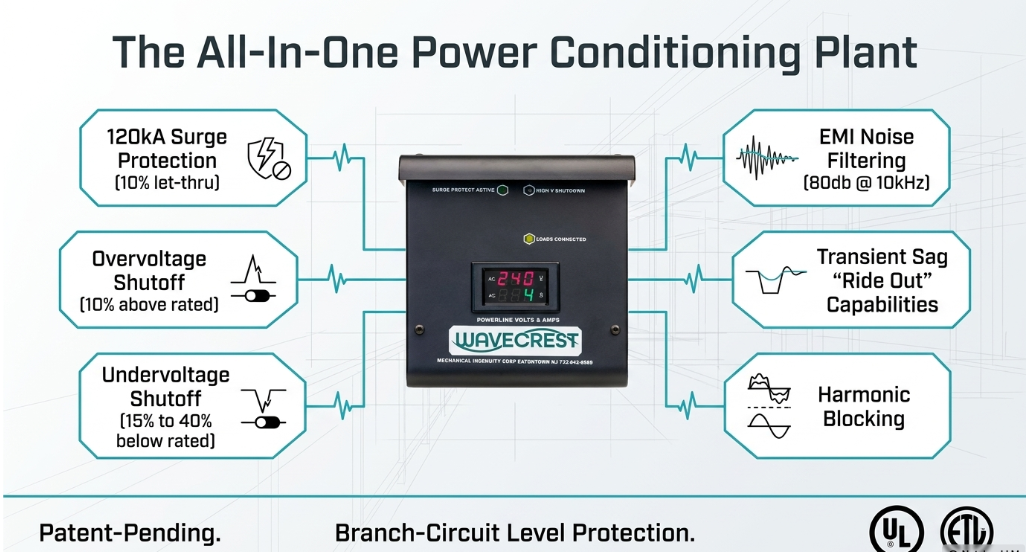
We've been closely following the development of a patent-pending device called Wavecrest, and we're incorporating it into our smart home installations as a core layer of electrical protection.
Here's why it's different from what you have now.
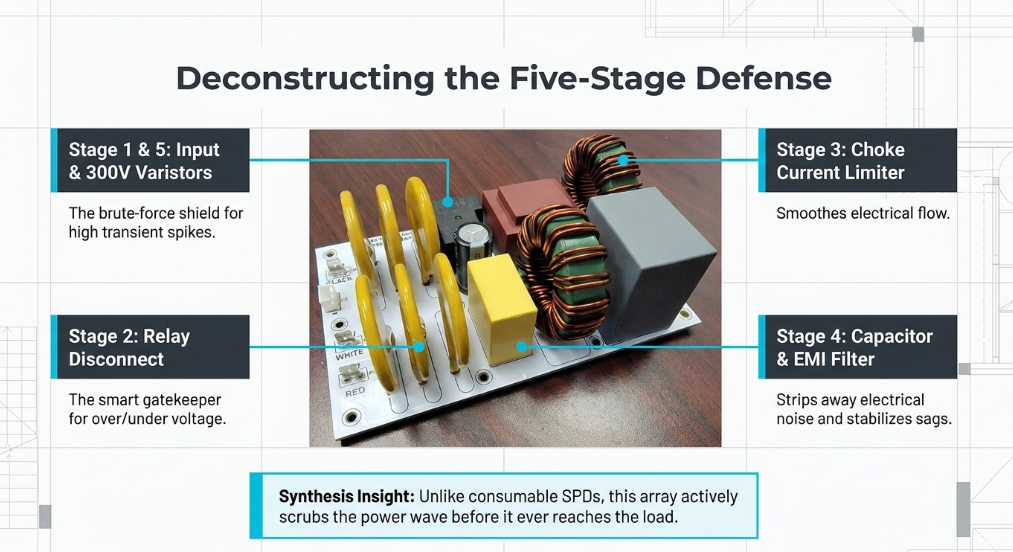
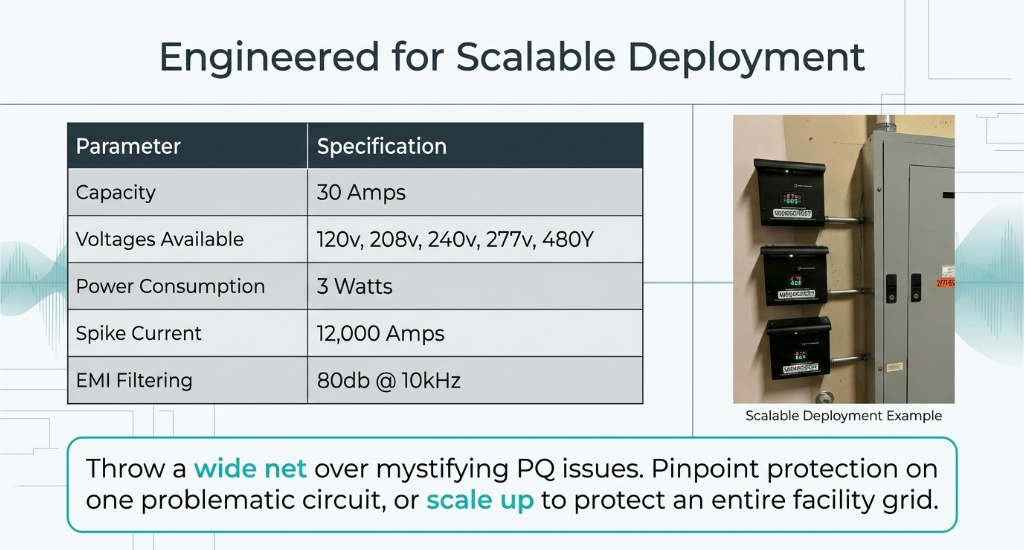
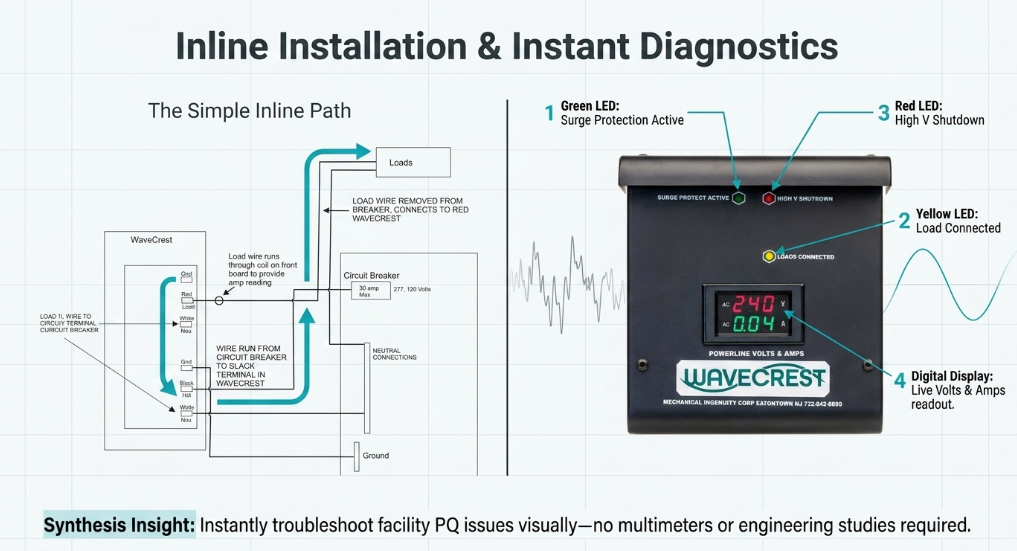
Rather than relying on a single surge protector at your main panel, Wavecrest installs individual surge protectors directly at the branch-circuit level that feed your most sensitive equipment. This targeted approach means protection goes exactly where your investment lives: your LED lighting, your heat pump, your home automation controls, your solar-tied circuits.
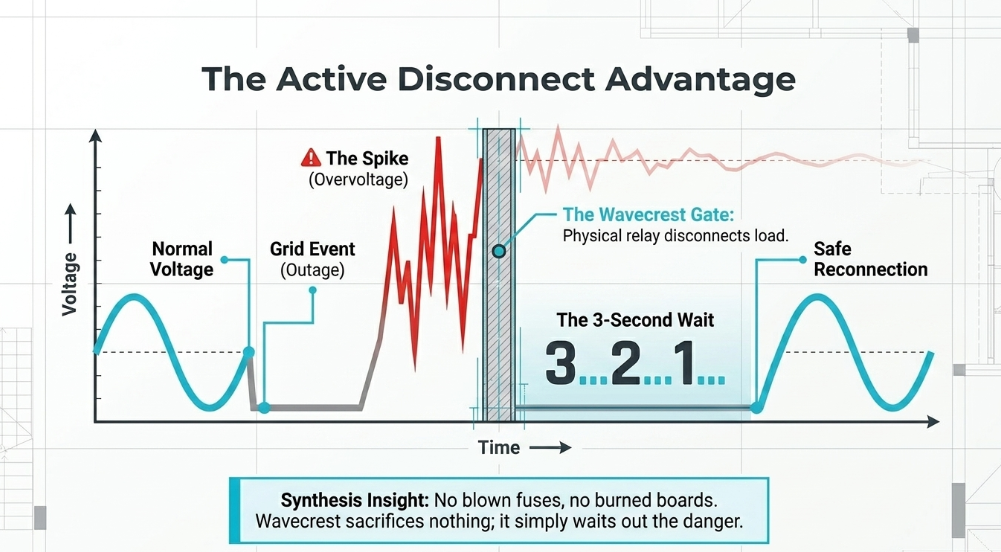
The device handles multiple types of power problems simultaneously, not just spikes, but voltage dips, sustained overvoltage events, and the electrical noise generated by your own smart home systems. When it detects voltage running too high, it cuts power to protect the connected equipment, then monitors the incoming supply and automatically restores power only after three consecutive seconds of clean, stable voltage. No blown fuses. No manual resets. No service call.
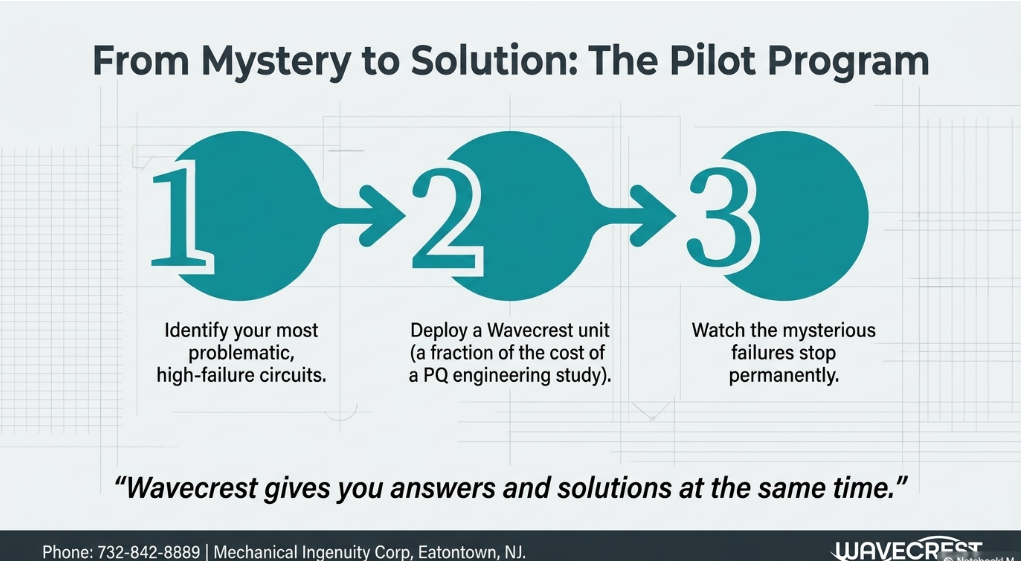
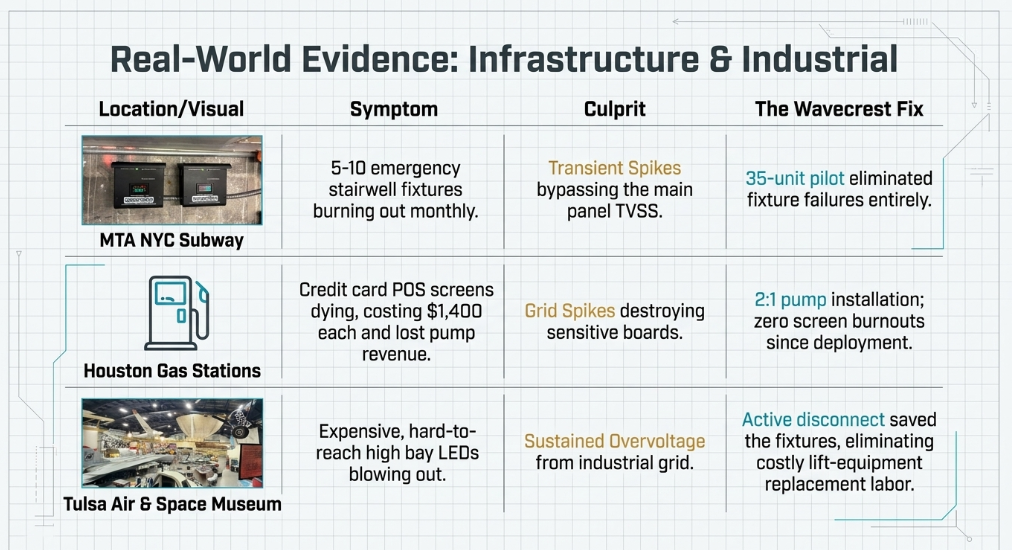
Real-world results have been striking. The NYC subway system installed Wavecrest units at its most problematic emergency stairwell locations in late 2025, where it was replacing 5–10 light fixtures per month. Since installation: zero failures. Houston gas stations that were losing $1,400 per pump screen weekly: zero losses after installation. A medical office building with flickering LED lights triggered by elevator and AC startup: problem solved completely.
What This Means for Your Home
At Smarter Homes, we think about this practically. You've invested in your home's technology, and that investment deserves to be protected at every level, not just at the panel.
As Austin and Westlake homes get smarter, greener, and more connected, the quality of the power feeding those systems matters more than ever. Solar panels, EV chargers, whole-home automation, heat pumps- all of it runs on sensitive electronics that the grid wasn't originally designed to protect.
Branch-level power protection is quickly becoming as fundamental to a smart home as surge protection itself. We think of it the same way we think about water filtration: you wouldn't just trust whatever comes out of the city pipe. You filter it at the point of use.
Your home's power deserves the same standard.
Smarter Homes serves the Austin and Westlake communities with smart home integration and technology solutions built to perform reliably from installation day through years of daily use. Interested in learning whether your home could benefit from power quality protection? We'd love to talk.
