Your Smart Home Could Protect More Than Your Home: How Technology Is Changing Home Insurance
Wildfire preparedness for Central Texas homes
Wildfire risk is no longer only a western issue. Hill Country development and drought cycles raise the risk for Austin-area neighborhoods. A few changes make a real difference:
- Treat the first five feet around the house as the critical zone. Replace wood mulch near the walls with gravel, river rock, or topsoil.
- Keep cedar and ash trees at a distance from the house, and prune low branches so fire cannot climb into the canopy.
- Check where embers collect: roof valleys, gutters, under decks, and around AC units.
- Drought-tolerant landscaping lowers fire risk and water use at the same time.
- Ask your local fire department about defensible space for your neighborhood.
Smart home sensors and monitoring can alert you to smoke, heat, and water events when you are away. Together with good property preparation, they are part of a more resilient home.
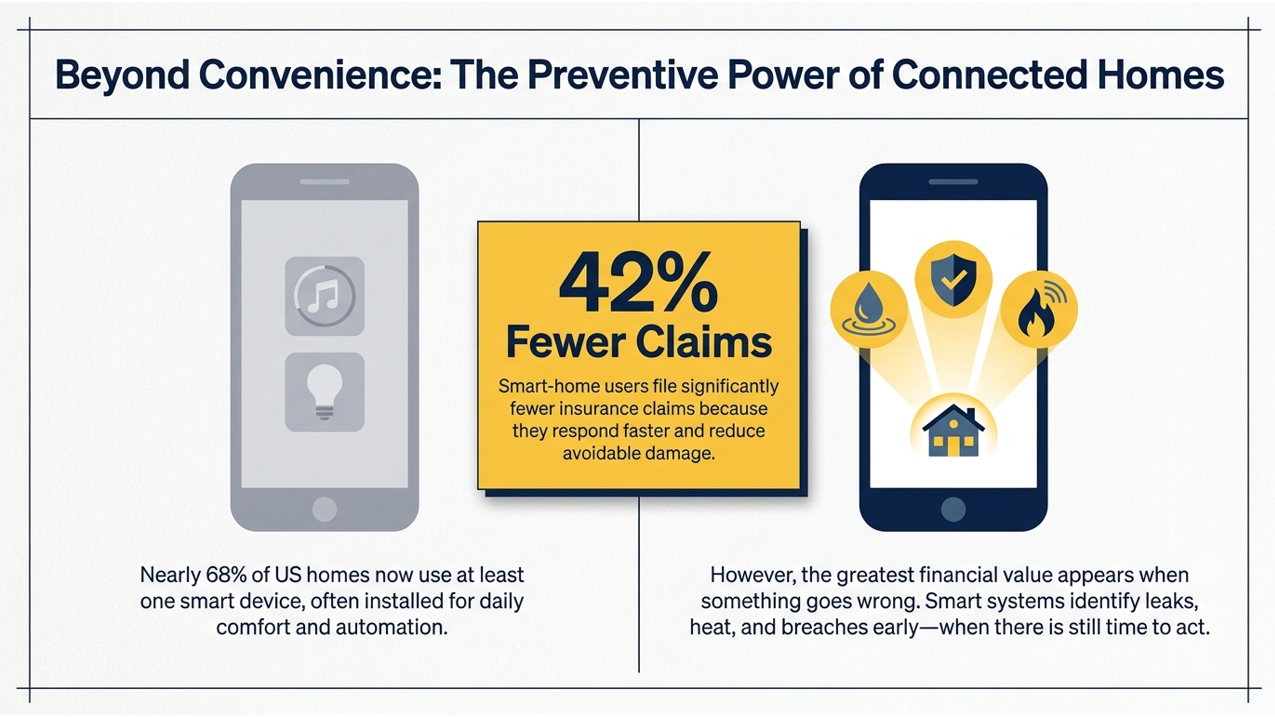
Smart home technology is usually sold around convenience.
Turn off the lights without leaving the couch. Check the front door from your phone. Adjust the thermostat before you arrive home.
Those conveniences are valuable, but they may not be the most important reason to invest in smart home technology.
When thoughtfully designed, a connected home can become an active risk-management system, detecting problems earlier and, in some cases, taking action before a small problem becomes an expensive insurance claim.
That changes the conversation from smart home convenience to smart home protection.
From Reacting to Damage to Preventing It
Traditional homeowners insurance is designed primarily to help financially after a covered loss occurs.
Smart home technology introduces another layer: prevention.
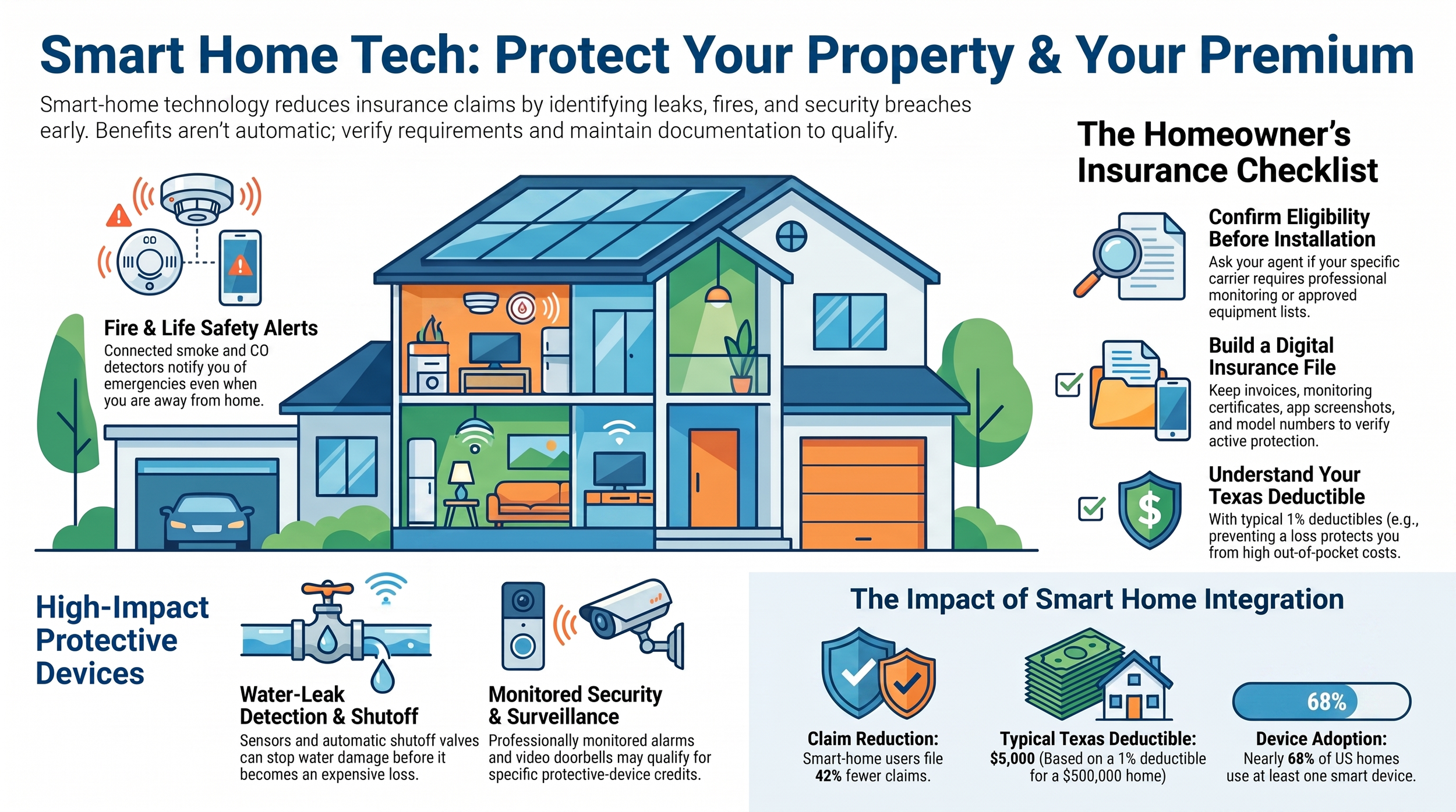
According to information highlighted by Brightside Insurance Group, smart home users may experience significantly fewer insurance claims because connected devices can identify threats earlier.
That distinction matters.
A water leak detected within seconds is very different from one discovered after a weekend away. An unusual temperature drop detected before a pipe freezes is very different from discovering the problem after the pipe bursts.
The goal isn't simply to know something went wrong.
It's to know early enough to limit or prevent the damage altogether.
The Hidden Cost of an Insurance Claim
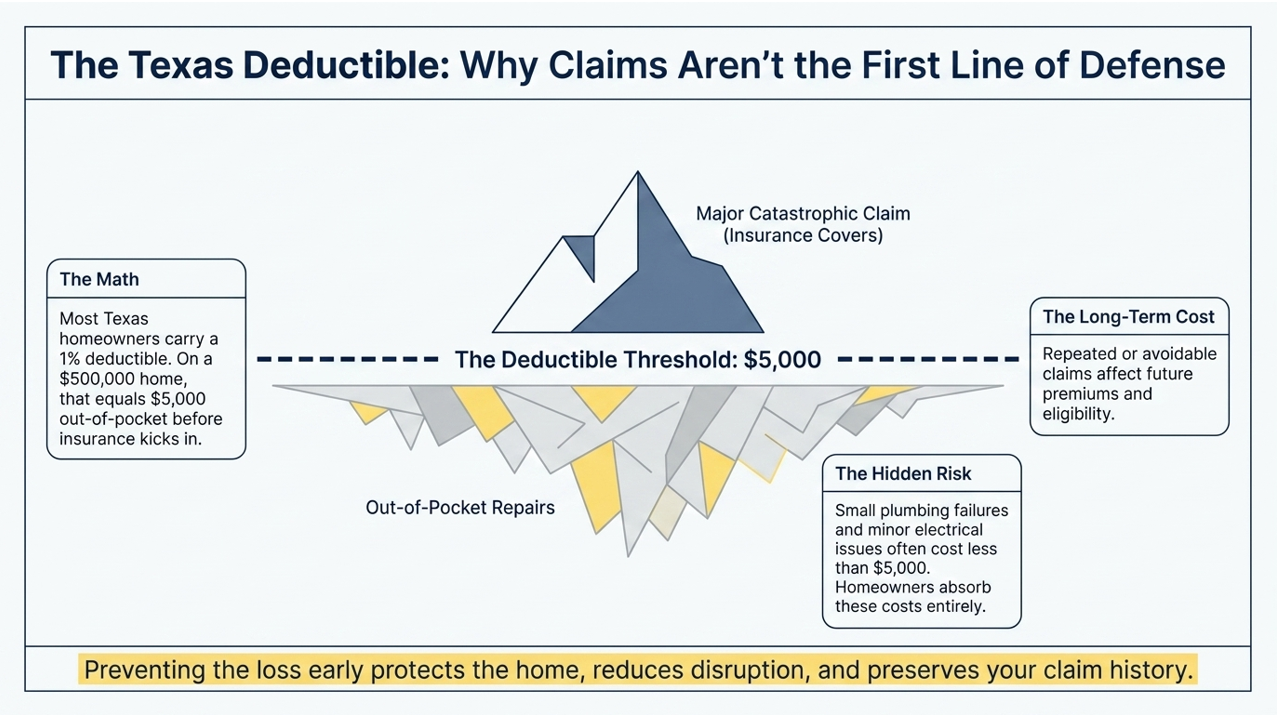
Homeowners sometimes assume that insurance eliminates the financial consequences of property damage but insurance still comes with deductibles, coverage limitations, and the possibility that repeated claims can affect future premiums or eligibility.
Consider a home insured for $500,000 with a 1% deductible.
That deductible would be $5,000.
If a plumbing leak causes $4,500 in damage to custom cabinetry, hardwood flooring, and drywall, the repair cost could fall entirely below the deductible. The homeowner has experienced significant damage and disruption, yet insurance may contribute nothing toward the repair.
That's why preventing the loss can be far more valuable than simply having coverage available after it happens.
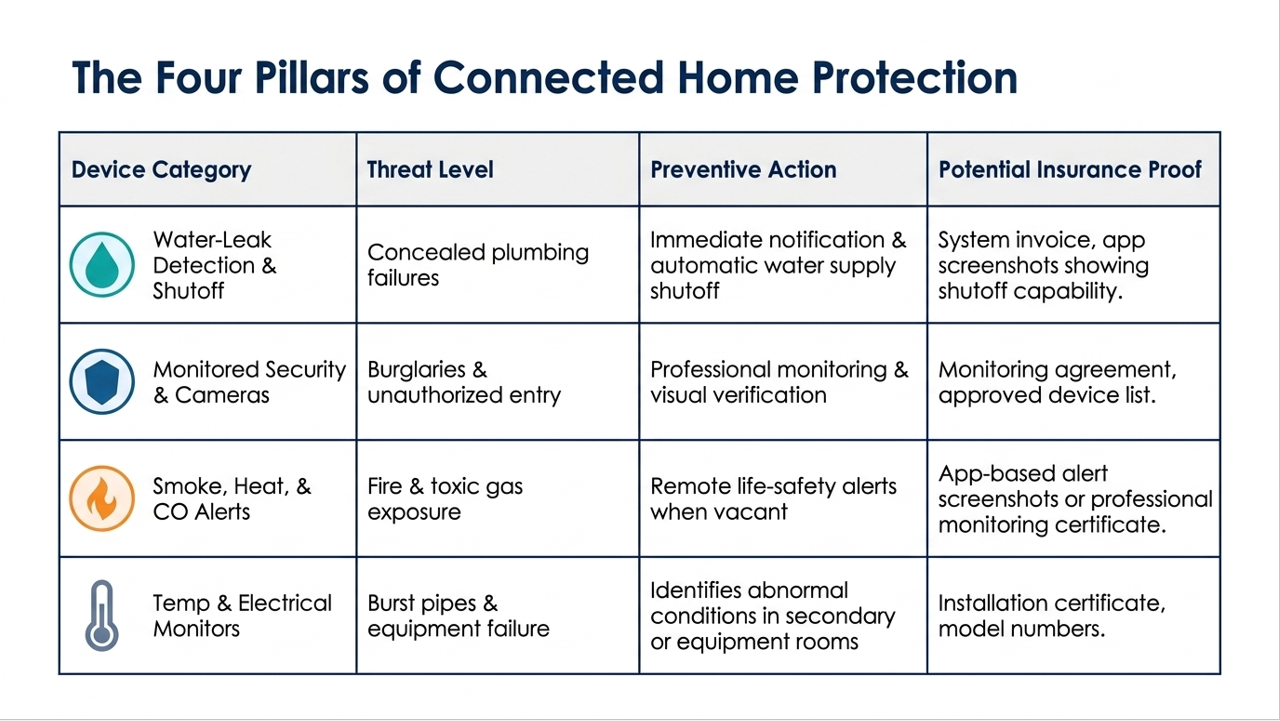
1. Water Leak Detection and Automatic Shutoff
Water can be one of the most destructive forces inside a home because a small plumbing problem can quickly spread into multiple rooms and building materials.
Smart leak sensors can be positioned near high-risk locations such as:
Sinks
Toilets
Washing machines
Dishwashers
Water heaters
Mechanical rooms
Detection, however, is only the first step.
A more comprehensive system can connect those sensors to an automatic water shutoff valve installed on the home's main supply.
When a leak is detected, the system can automatically stop the water flow instead of relying solely on the homeowner to see an alert and respond.
That can mean the difference between cleaning up a small puddle and repairing floors, cabinetry, drywall, and furnishings throughout the home.
2. Professionally Monitored Security
Smart security has also evolved far beyond a traditional alarm that simply makes noise. Modern security systems can combine cameras, sensors, analytics, two-way communication, and professional monitoring to provide greater context when an event occurs.
Instead of treating every movement the same, intelligent cameras can help distinguish between ordinary activity and a potential security threat. With professional monitoring, a security event can be evaluated and escalated without relying entirely on the homeowner to respond to a notification.
The objective is simple: Identify the threat sooner and respond faster.
3. Connected Smoke, Heat, and Carbon Monoxide Detection
A traditional smoke detector provides an essential warning but its effectiveness can be limited when nobody is home to hear it. Connected life-safety systems expand that protection.
Depending on the equipment and monitoring configuration, smoke, heat, or carbon monoxide events can generate remote notifications and potentially alert a professional monitoring service. Some systems can also detect abnormal temperature increases, providing another layer of early detection.
When dealing with fire and other rapidly developing emergencies, earlier awareness can dramatically change the outcome.
4. Temperature, Freeze, and Environmental Monitoring
Not every threat happens quickly. Some develop quietly in areas homeowners rarely visit. Temperature monitoring can be especially valuable in second homes, mechanical spaces, attics, basements, wine cellars, and other areas where environmental conditions matter.
If temperatures begin approaching dangerous levels, homeowners can be alerted before vulnerable plumbing freezes or sensitive spaces experience damaging conditions. The same philosophy applies to electrical and other environmental monitoring: Find abnormal conditions before they cause physical damage.
An Alert Is Not the Same as Automatic Protection
There is an important difference between receiving a smartphone notification and having a system that can take action. Imagine receiving a freeze alert while you're asleep, on an airplane, or somewhere without reliable service.
The technology detected the problem, but the response still depended on you. An automatic water shutoff, professionally monitored security system, or monitored life-safety system reduces that dependence on immediate human intervention.
This distinction can also matter to insurance companies when evaluating protective technology.

Talk to Your Insurance Agent Before You Buy
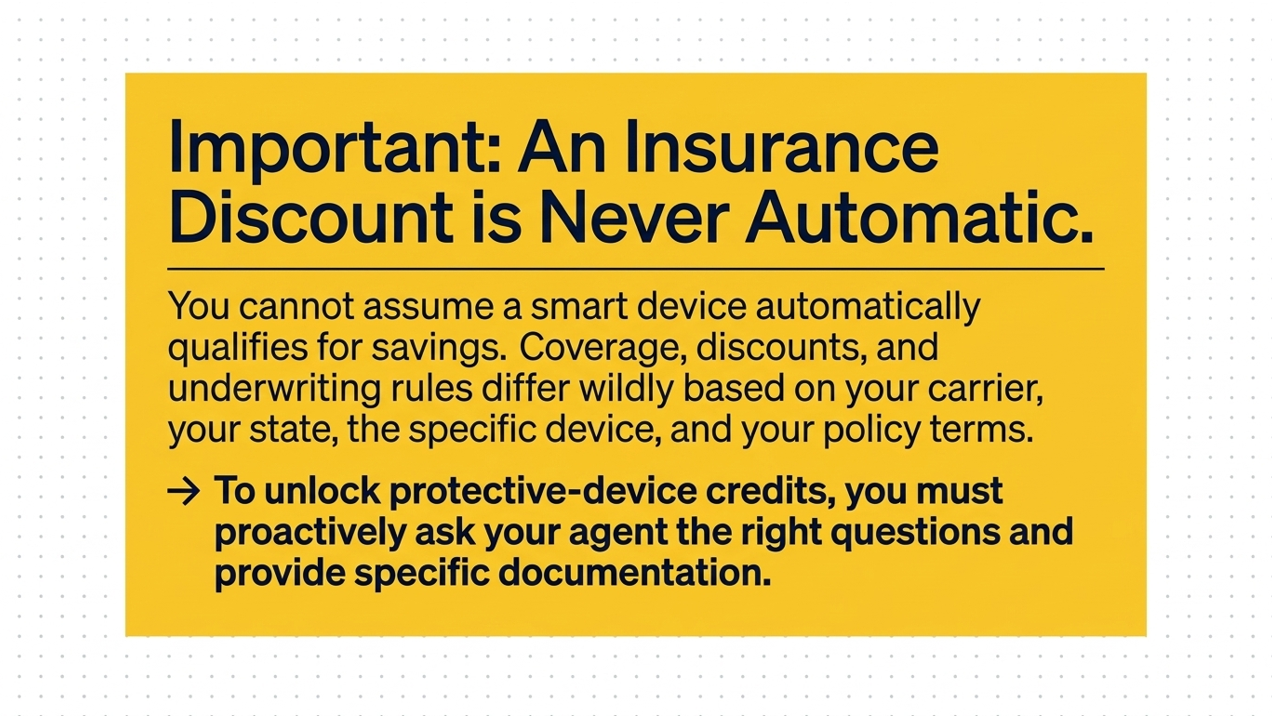
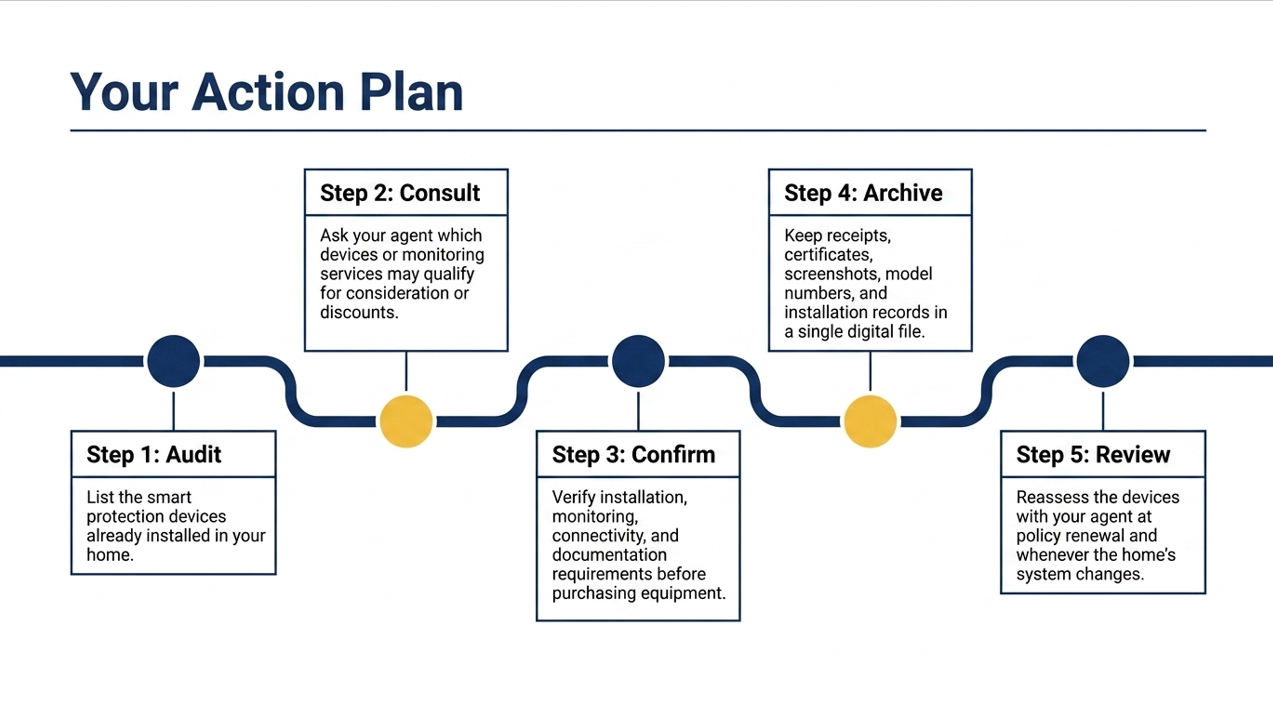
One of the biggest mistakes homeowners can make is assuming that installing smart technology automatically qualifies them for an insurance discount
It doesn't.
Every insurance carrier has its own requirements.
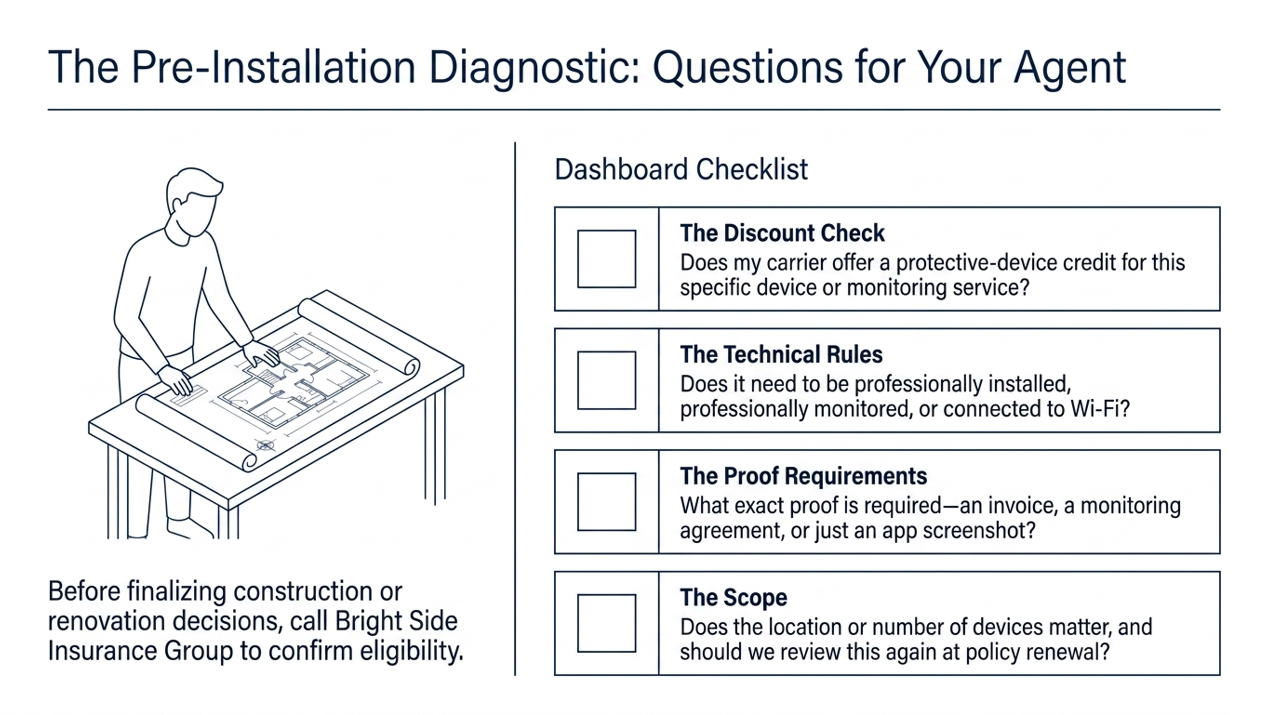
Before purchasing equipment specifically for insurance benefits, ask your insurance professional:
Does my carrier offer a protective-device credit?
Then determine whether the equipment must be professionally installed or monitored, whether specific devices or manufacturers are approved, and whether the carrier requires a certain level of whole-home coverage.
A single leak sensor under one sink, for example, may not satisfy the same requirements as a professionally installed whole-home leak detection and automatic shutoff system.
The best strategy is simple:
Ask first. Install second.
Document Everything
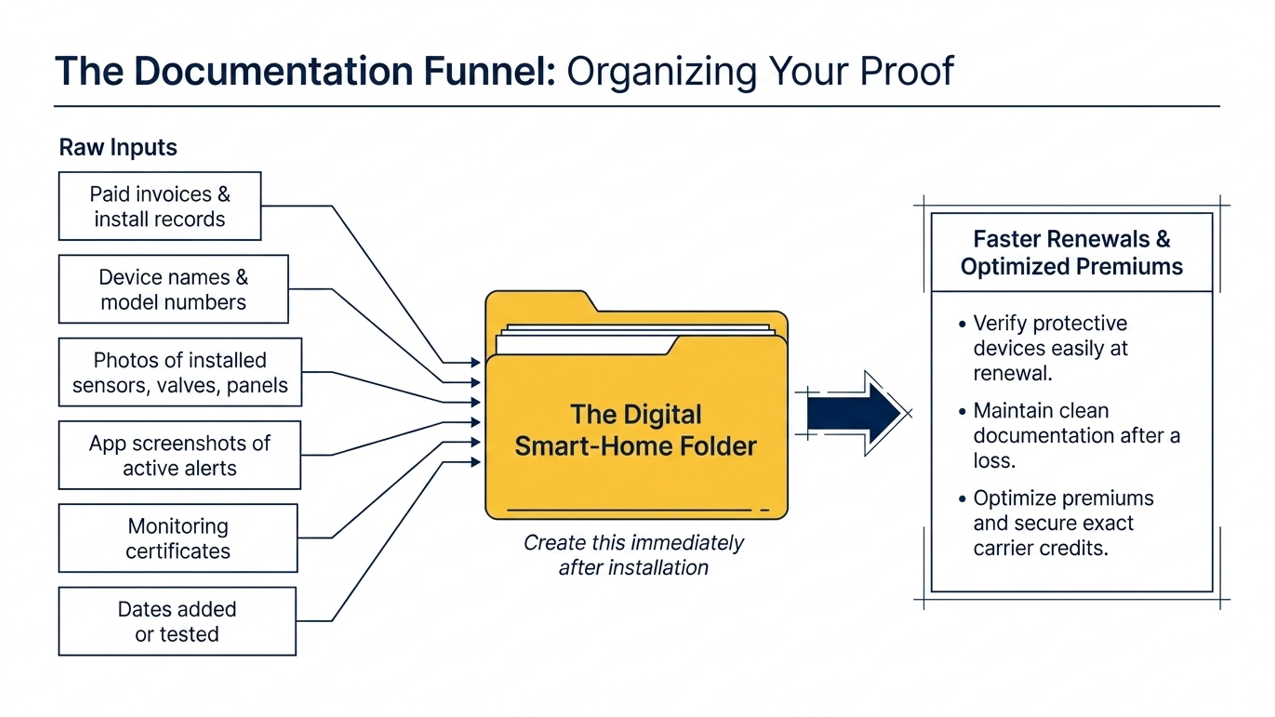
The technology itself is only part of the equation. Homeowners should also maintain clear documentation showing exactly what has been installed.
Create a digital home-technology folder containing invoices, installation records, device names and model numbers, monitoring agreements, active certificates, photos of installed equipment, and other relevant system documentation. If your insurance carrier provides a protective-device discount, keep documentation confirming that, too. This creates a clear record you can share with your insurance professional when needed.
Plan Technology and Insurance Together
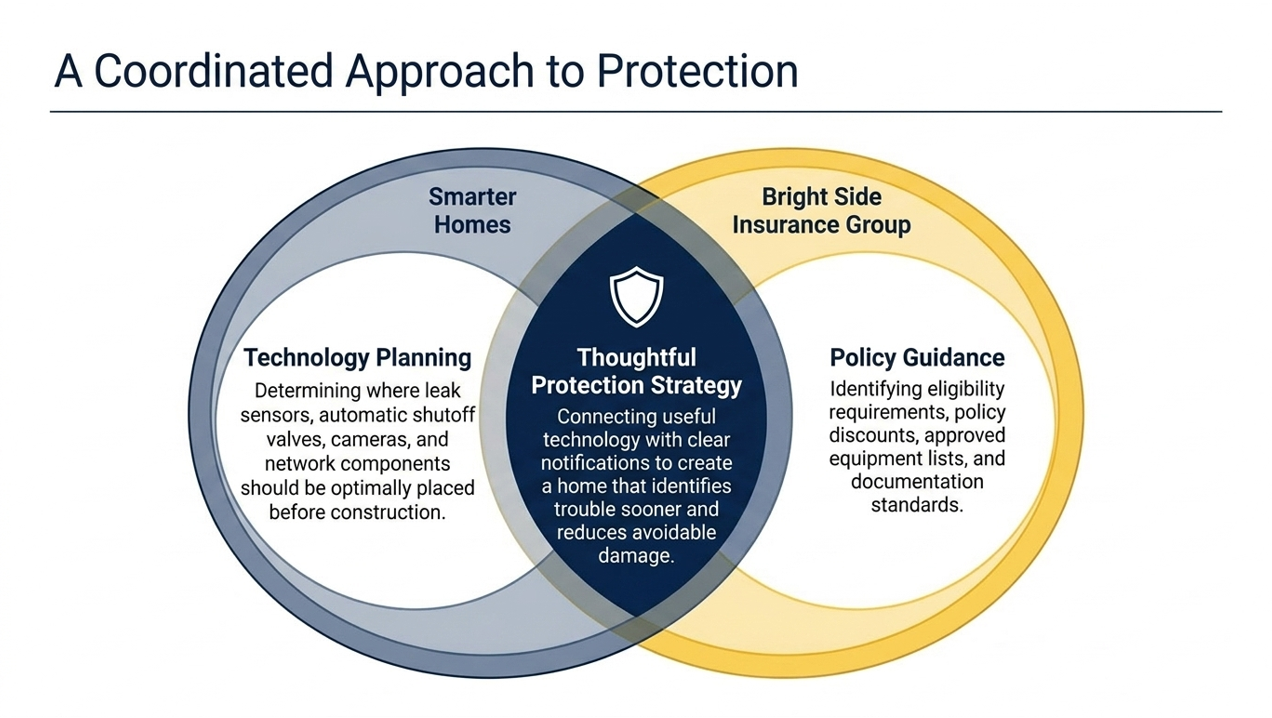
The best time to think about smart home protection isn't after construction is complete. It's during design. When walls are already open during new construction or a major renovation, homeowners can plan infrastructure for networking, security, cameras, water protection, environmental monitoring, lighting, and other connected systems.
A professional smart home integrator can design the technology infrastructure while an insurance professional determines which protective measures may be recognized by the homeowner's specific carrier. These two conversations should happen together. The smartest system isn't necessarily the one with the most technology.
It's the one designed around the property's actual risks and the people living there.
A Smarter Definition of the Smart Home
The next generation of smart homes will do much more than respond when someone says, “Turn off the lights.”
They will increasingly monitor their own environments.
They will recognize unusual conditions.
They will communicate problems earlier.
And in some cases, they will automatically intervene before those problems become disasters.
That changes what a smart home represents.
It isn't simply a collection of connected conveniences anymore.
It's becoming an intelligent layer of protection around the property, the people inside it, and the financial investment behind it.
The future of home technology may ultimately be less about recovering from damage and much more about making sure the damage never happens in the first place.
