Palladiom Drapery: When the Hardware Is Allowed to Be Seen
For years, the gold standard in motorized drapery has been invisibility. Lutron's Sivoia QS tracks are built to disappear, recessed into a ceiling pocket, hidden behind a fascia board, or tucked into custom millwork so the only thing you notice is fabric moving on its own. It's a beautiful effect, but it comes with a catch: someone has to plan that pocket months before the drapery fabric is even chosen, and if the numbers are off, the ceiling has to come apart to fix it.
Lutron's newest release, Palladiom Drapery, takes the opposite approach. Instead of hiding the hardware, it puts it on display. And while the product itself is genuinely new, the bigger story is what it takes to actually get one of these systems right in a real home, which is where the choice of integrator starts to matter as much as the choice of hardware.
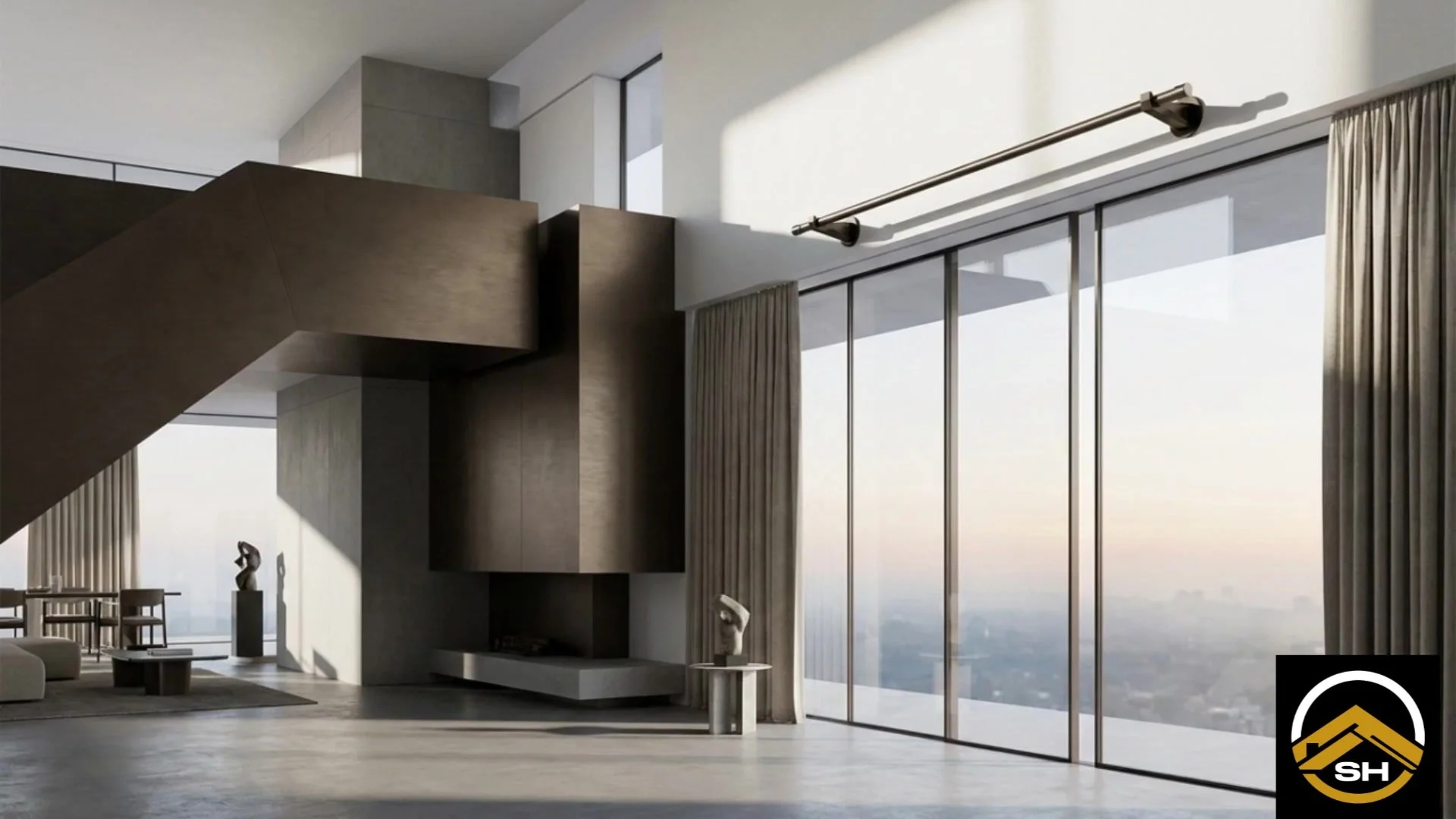
An Exposed System, On Purpose
Palladiom Drapery is built around a slender, exposed rod closer in spirit to a traditional decorative curtain pole than to a concealed motorized track. Most of the automation lives inside the rod itself, so the mechanics stay out of sight even though the hardware doesn't.
That's a meaningful shift. Concealed drapery systems require real construction coordination: a framed pocket, precise dimensions, and a commitment to fabric thickness and pleat style well ahead of the interior design phase. Palladiom Drapery sidesteps most of that. Because the rod is meant to be seen, it doesn't need a ceiling cavity built around it, which makes it a strong option for rooms where a pocket isn't feasible, and for renovations where opening up the ceiling simply isn't on the table.
It's still a genuine Lutron motorized system underneath the design: quiet, precise movement, with the reliability the brand is known for. It's just wearing the hardware on the outside instead of hiding it in the walls.
This distinction matters more than it might seem at first. A concealed system asks a home to accommodate the technology; an exposed system asks the technology to earn its place in the room's design. That's a higher bar for the hardware to clear; the finish, the proportions, and the way it sits against the fabric all have to hold up to scrutiny, because nothing is hidden. Palladiom Drapery is designed with that scrutiny in mind, but it also means installation and specification decisions carry more visual weight than they would with a system tucked out of sight.

Finished Like a Fixture, Not a Mechanism
Palladiom Drapery is available in five finishes: Pure White, Black Anodized, Clear Anodized, Bronze Anodized, and Satin Nickel, designed to coordinate with the rest of the Palladiom line, including its keypads, thermostats, and roller shades. The idea is that the drapery hardware reads as an intentional architectural detail, not an add-on bolted in after the design was finished.
The system also accommodates a broad range of decorative fabrics, including the customer's own material, so the drapery itself can still be selected on the designer's timeline rather than dictated by a pocket that was framed months earlier. That flexibility is part of the appeal, but it also means someone needs to coordinate fabric, finish, and mounting details across what are often three separate vendors: the drapery fabricator, the hardware manufacturer, and the automation integrator. When those three don't communicate well, the exposed hardware is the first thing that shows it.
Fits Into the System You Already Have
Palladiom Drapery integrates with compatible Lutron control platforms, meaning it can be tied into wall keypads, mobile app control, scheduling, and lighting scenes alongside the rest of a home's shading and lighting. For a home already running Lutron for lighting or shading, Palladiom Drapery isn't a separate system to learn; it's another device on the same keypad that already dims the lights and drops the shades for movie night.
That integration is straightforward on paper. In practice, it depends entirely on whether the rest of the home's Lutron ecosystem was specified and programmed correctly in the first place. A keypad that's already carrying six other scenes needs a thoughtful decision about where drapery control lives in that hierarchy; button labeling, scene logic, and load balancing all come into play. This is a small detail on a spec sheet and a genuinely easy thing to get wrong in the field.
Availability
Palladiom Drapery became available to quote and order on July 24, 2026. Current lead times are:
6 weeks for non–Satin Nickel finishes
12 weeks for Satin Nickel
Given those timelines, finish selection is worth locking in early, particularly for Satin Nickel, where the extra lead time can affect a broader installation schedule. Because Palladiom Drapery is exposed rather than concealed, there's less structural downside to a late decision than there would be with a pocketed system, but a 12-week lead time can still quietly become the long pole in an installation schedule if nobody flags it early.
Why It's Worth Considering
Palladiom Drapery won't replace concealed drapery tracks for every project; there will still be rooms where a hidden pocket is exactly the right call, and clients who want the automation to disappear completely. But for the rooms where a pocket isn't possible, or where the hardware itself can be a design feature rather than a liability, Palladiom Drapery is a genuinely new option in the Lutron lineup, not just a finish variant on an old idea.
The Part That Doesn't Show Up on the Spec Sheet
Here's what a product page can't tell you: Palladiom Drapery is easy to get right and easy to get wrong, and the difference usually has nothing to do with the hardware itself. It comes down to whether the team specifying it actually understands how it fits into the rest of the home, the existing Lutron programming, the fabricator's tolerances, the finish lead times, and the keypad logic that ties it all together.
This is exactly why the right integration partner matters as much as the right product.
Why Smarter Homes Is the Right Team for This
Smarter Homes is an HTA-certified Lutron specialist, which means we're not learning the Palladiom ecosystem for the first time when a client asks about it; we're already fluent in exactly the trade-offs this product introduces: concealed versus exposed, wired versus battery, finish and fabric lead times, and how a new device slots into a keypad that's already doing real work.
A few things set that expertise apart in practice:
We think in systems, not products. Palladiom Drapery doesn't get specified in isolation. We look at how it interacts with the lighting scenes, the existing shading, and the keypads already in the room, so "Entertain" still means the same thing it did before drapery was added.
We manage the timeline, not just the order. With lead times ranging from 6 to 12 weeks depending on finish, we build drapery selection into the project schedule early rather than letting a finish decision made in month nine become the reason month eleven slips.
We coordinate across vendors. Fabric, hardware, and automation come from different sources on a project like this. We own that coordination, so the finish, the fabric weight, and the mounting details all arrive in agreement instead of getting reconciled on-site.
We ask the discovery questions first. Whether a room actually needs the concealed elegance of Sivoia QS or the design-forward flexibility of Palladiom Drapery isn't a question with a default answer; it depends on the room, the renovation constraints, and how the client actually wants the hardware to read. That's the same discovery-first approach we bring to every part of a smart home build, applied here to a genuinely new decision in the Lutron lineup.
If you're planning drapery for a new build or a renovation where a hidden pocket isn't an option, Smarter Homes can walk you through whether Palladiom Drapery is the right fit for your space and make sure it's integrated correctly into your home's existing systems and your project's timeline, before either becomes a bottleneck.
