Josh.ai at CEDIA 2026: The Smart Home Is Learning to Understand Intent, Not Just Commands
We went into CEDIA Expo 2026 expecting to hear a lot about artificial intelligence. We did. But during the time we spent with Josh.ai, the part that stayed with us wasn't simply that AI is becoming part of the smart home. It was how AI is beginning to change the way a home is programmed, personalized, and ultimately experienced.
Smarter Homes attended the Josh.ai presentation and live demonstrations at CEDIA this year, and one of our biggest takeaways was that the conversation is moving well beyond, “Turn on the lights.”
The more interesting question is becoming: can the home understand what you are trying to accomplish without requiring you to think through every individual command? That is where things started getting interesting.
Moving Beyond Simple Voice Commands
During the presentation, Josh.ai walked us through AI X OS, its software experience designed around the idea that there isn't one correct way to control a home.
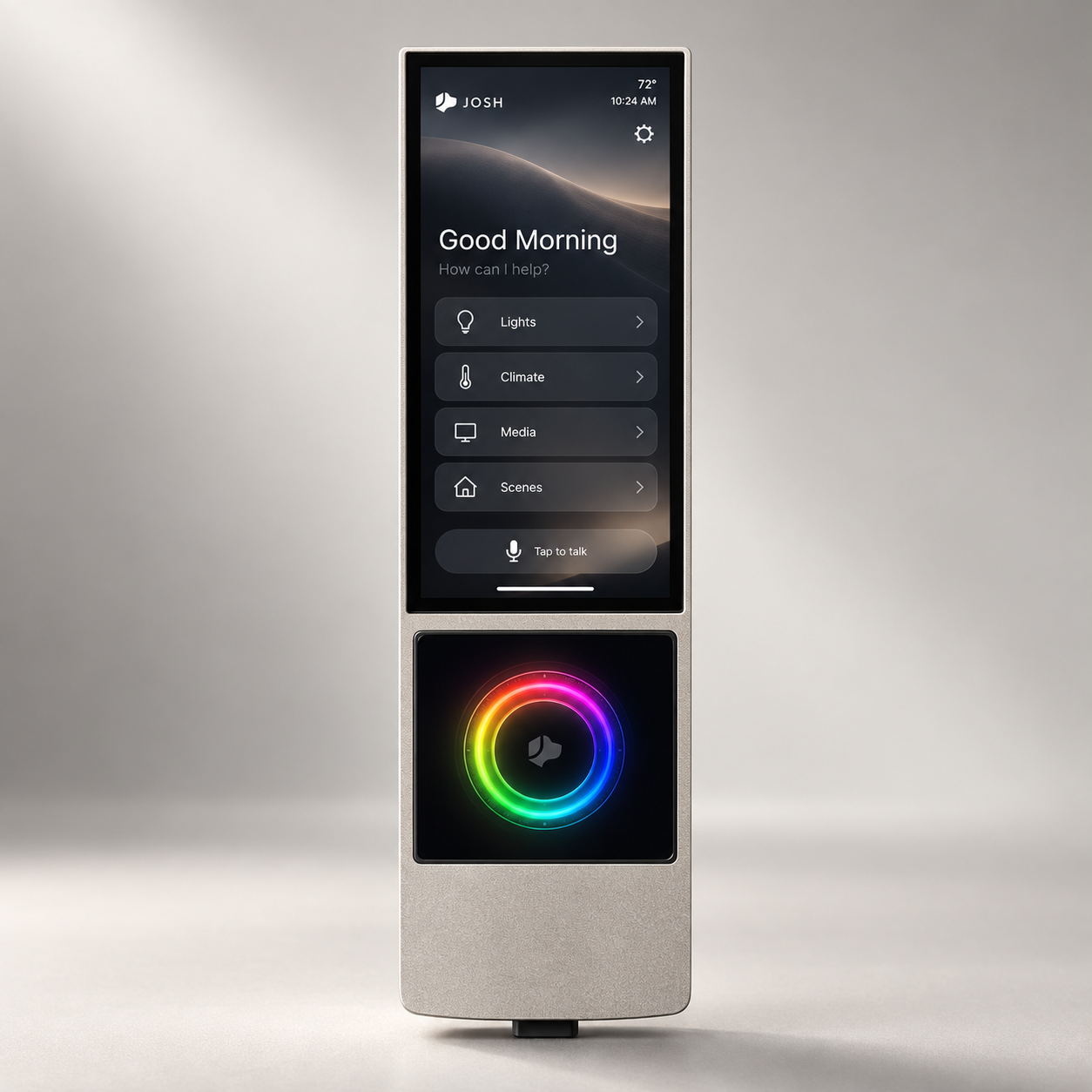
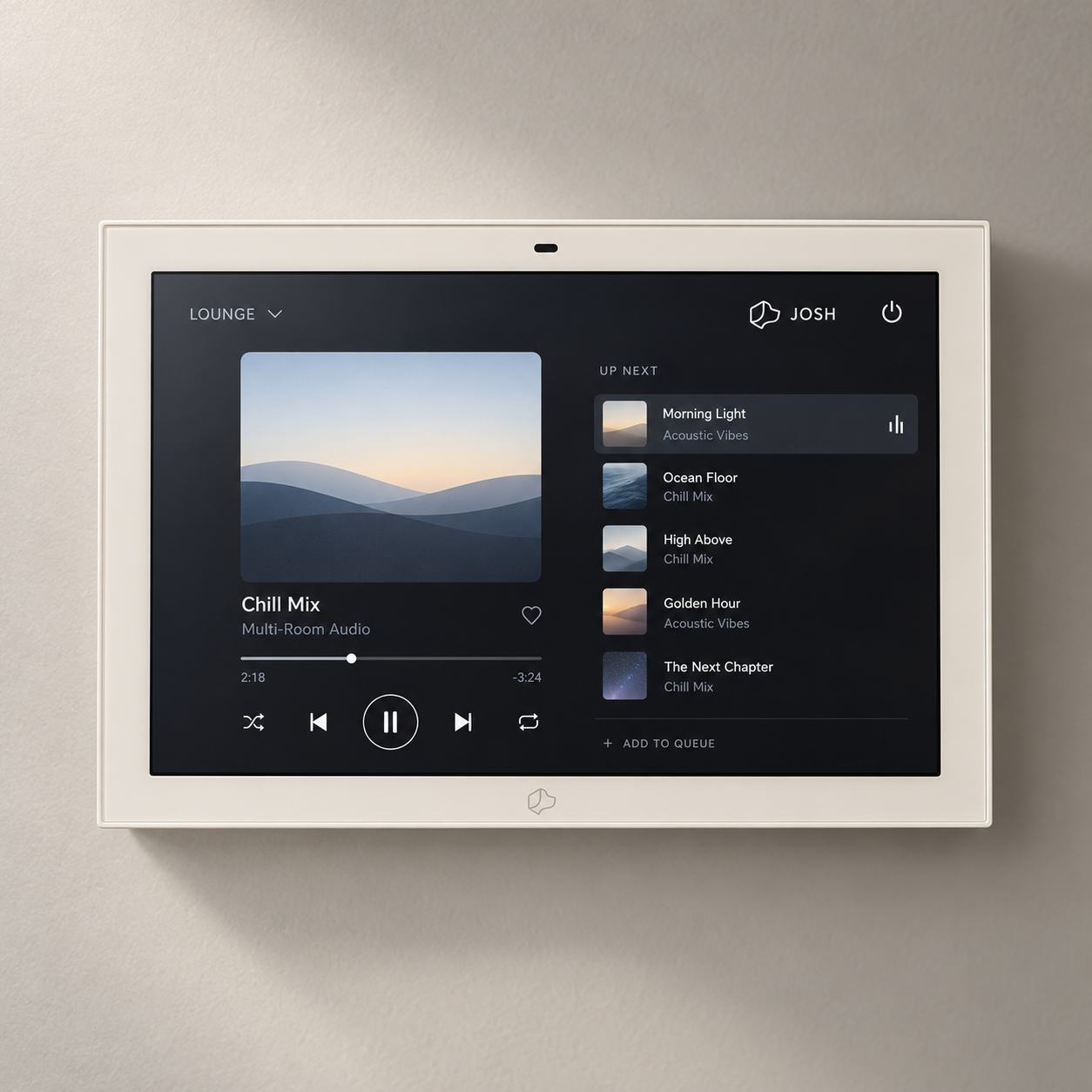
Some homeowners naturally reach for their phone. Others prefer a wall-mounted touchscreen, a handheld remote, or simply using their voice. The system presented at CEDIA brings those different interactions together rather than forcing the homeowner to adapt to the technology. Josh.ai demonstrated personalized dashboards, favorites, media controls, and more contextual requests that go beyond a rigid list of commands.
One example used during the presentation was asking the system to create the feeling of a Mediterranean sunset. That is very different from saying, “Set the lights to 35 percent.” The first describes an experience. The second tells the system exactly what to do.
That difference may sound small, but it points toward a much bigger shift in home automation.
The Demo That Really Got Our Attention
The part of the Josh.ai presentation that stood out most to us was actually on the integrator side.
Josh.ai presented ProStudio, a platform built around the professionals who design, deploy, program, and support these systems. It brings project tools, support resources, system information, and programming functionality into one environment.
Then came the Automations demonstration. Instead of manually building every step of a routine, the presenter typed a natural-language request:
“Every day at sunrise, set the lights in the lounge to 100%.”
The system interpreted the request, identified the appropriate room and devices, and built the automation.
Then they went further. A more involved demonstration combined lighting changes, music, an announcement, and camera information. The programmer could continue communicating with the system in normal language to adjust what had been created, while still retaining the ability to edit the individual actions.
For us, that was one of the most meaningful moments of the demonstration. Not because manually programmed scenes are going away, but because AI may give integrators another way to get from an idea to a working experience more efficiently. And if the technology behind the scenes becomes easier to manage, the homeowner experience can become better too.
Where Josh Vision Fits In
The demonstration also incorporated Josh Vision.
At CEDIA, a camera was used in an automation that monitored people in the room and used visual information to influence the lighting. The demonstration was intentionally playful, but the bigger idea was more interesting: cameras, sensors, timing, lighting, audio, locks, and other systems can become inputs in a much broader automation.
That moves the smart home closer to responding to context rather than waiting for someone to push a button every time something needs to happen.
The important part, however, is thoughtful design. Just because a system can automate something doesn't necessarily mean it should. Good home technology still requires decisions about what should happen automatically, what should remain under the homeowner's direct control, and what will actually make everyday life easier.
The Hardware Still Matters
AI may have dominated the conversation, but Josh.ai also showed how its software experience extends across different physical interfaces.
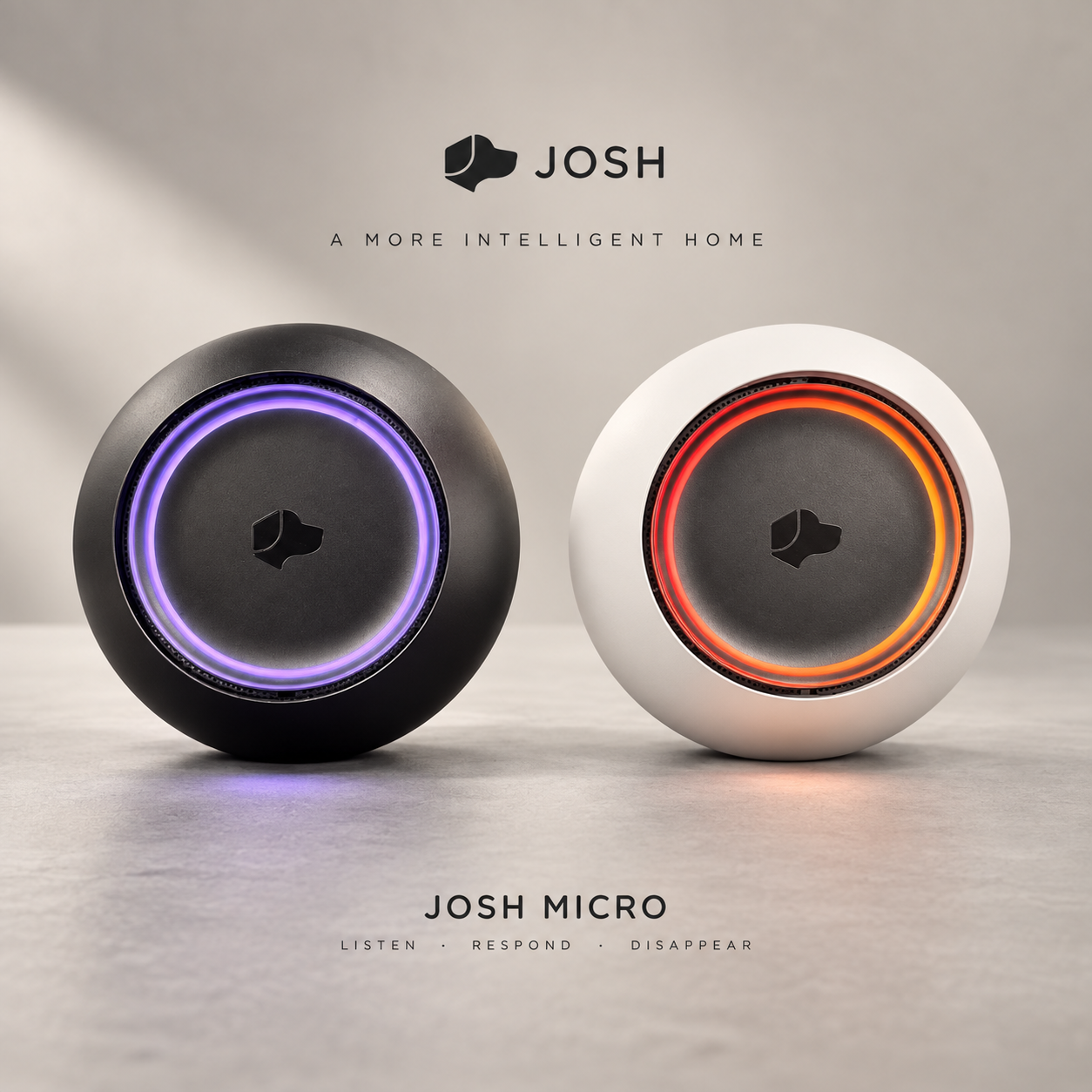
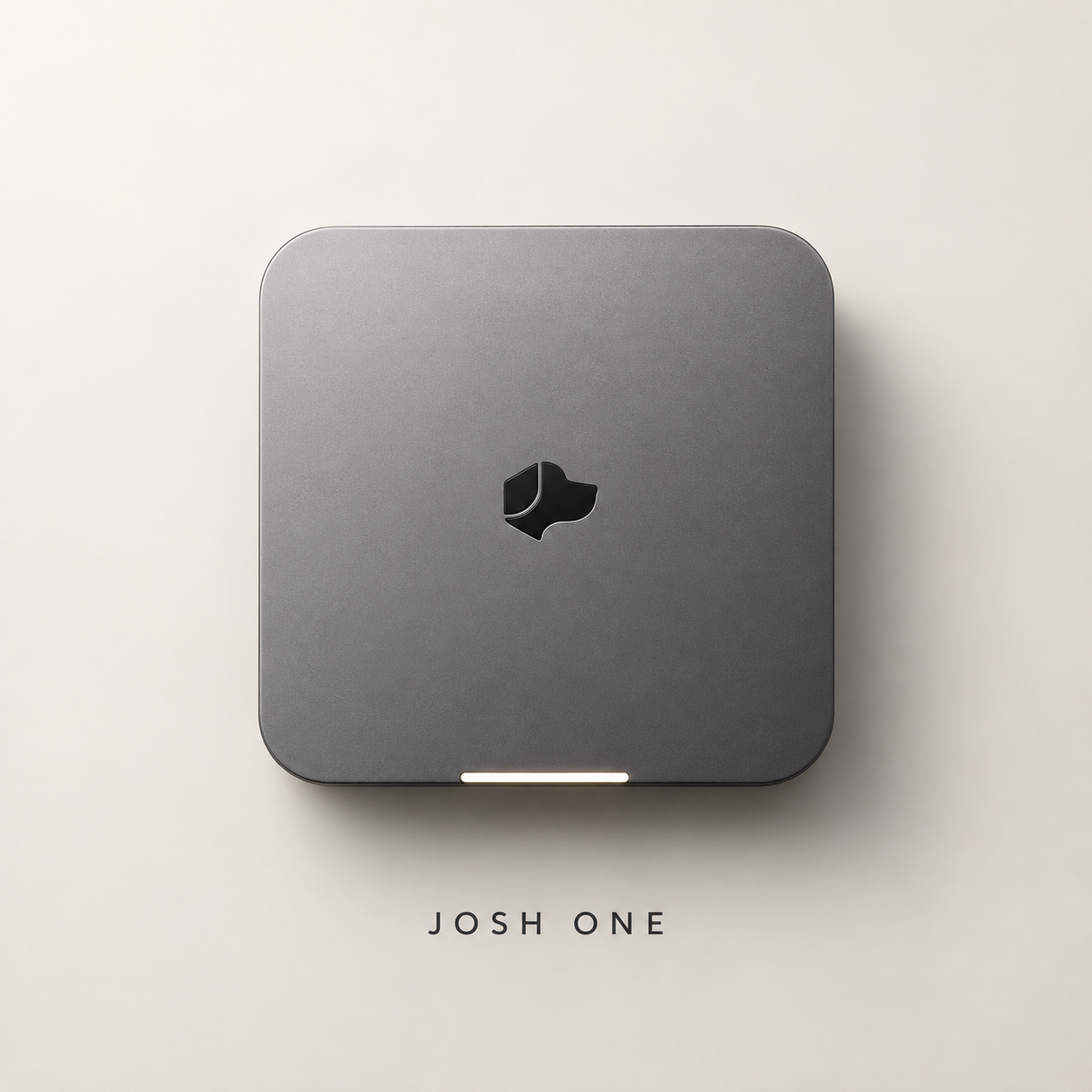
The presentation included Josh Nano, Josh Micro, Josh Touchscreen, Josh Core, Josh One, and the Josh Edge handheld remote.
That matters because the best interface often changes depending on the room. Voice may make perfect sense when you're walking into the kitchen with your hands full. A touchscreen may be better when you want to browse music. A remote is still incredibly natural when you're sitting down to watch a movie.
A truly integrated home shouldn't require the homeowner to choose one interface and use it everywhere. The system should meet them where they are.
What This Could Mean for Homeowners
A gap has long existed between what sophisticated home technology can do and how easily a homeowner can use it. More intelligence doesn't automatically solve that problem; sometimes, more technology simply creates more menus, more apps, and more things to remember.
What caught our attention about the Josh.ai presentation was its focus on reducing some of that friction. Personalized interfaces, natural-language control, media visibility across the home, scene recommendations, and more flexible automations all point toward a home that requires less explanation from the homeowner.
Ideally, the homeowner shouldn't have to understand how everything is programmed. They should simply know that when they arrive home, entertain friends, settle in for a movie, or go to bed, the house responds naturally.
What It Could Mean for Integrators
Homeowners may never see another side to this story.
Luxury smart homes can contain hundreds of devices and enormous amounts of programming. The homeowner gets a simple button that says “Good Night,” but behind that button may be lighting, shades, audio, climate, locks, and security working together.
Tools like ProStudio and AI-assisted Automations could change some of the work required to create and maintain those experiences. The goal isn't necessarily to remove the professional from the process. If anything, it puts more importance on the person deciding what the home should actually do.
AI can help build the instructions. It still takes thoughtful design and integration to determine which instructions make sense.
Our Biggest Takeaway From Josh.ai at CEDIA
At the end of the presentation, Josh.ai kept returning to an idea that aligns closely with how we think about residential technology: the technology itself shouldn't be the center of the home.
It should support the way people live in it.
The company's CEDIA presentation connected intelligent control with lighting, media, routines, natural rhythms, and technology that increasingly fades into the background. That was probably our biggest takeaway.
The next chapter of the smart home may not be about adding more things to control. It may be about needing to control them less.
And after seeing what Josh.ai demonstrated at CEDIA 2026, we're interested to see where that idea goes next.
Smarter Homes designs and integrates custom Lutron Ketra lighting, motorized shading, and smart home networks for the Austin and Westlake, Texas, markets.
